9 Best Outdoor Pizza Oven for Beginners: Easy-to-Use Models Compared
Discover the best outdoor pizza oven for beginners. Our research-based guide compares gas, electric, and multi-fuel options from Ooni, Solo Stove, Gozney, Ninja and more so you can choose with confidence.

Choosing the best outdoor pizza oven for beginners can feel overwhelming. High-heat ovens promise restaurant-style crusts in 60–90 seconds, yet many models demand careful fuel management, constant turning, or a steep learning curve that frustrates new users. The right oven removes most of those barriers while still delivering the blistered crust and fast cook times that make outdoor pizza worthwhile. Beginners generally do best with gas or electric models that light with a dial or button, reach cooking temperature in 15–25 minutes, and offer enough space for 12- to 14-inch pizzas. Multi-fuel ovens add wood-fired flavor but introduce more variables. Size, weight, and storage matter just as much as peak temperature—especially if you plan to move the oven or store it between uses. This guide reviews ten well-regarded outdoor pizza ovens selected from expert testing roundups and product specifications. We focus on ease of setup, temperature control, portability, and practical limitations rather than marketing claims. Whether you want a simple propane oven for weeknight pizza nights or an electric option for flame-restricted spaces, the recommendations below are designed to help you choose with confidence. Best Overall: Ooni Koda 2 Best Budget: Solo Stove Pi Prime Best Premium Portable: Gozney Roccbox Best Electric (No Flame): Ninja Artisan Outdoor Pizza Oven Best Multi-Fuel You may also find our best Gas Pizza Oven for Home Use guide useful.
Quick Comparison Table
| Image | Product | Key Feature | Buy Now |
|---|---|---|---|
| Ooni Koda 2 🏆 Best Overall Outdoor Pizza Oven | Tapered flame burner designed for • Accommodates typical home-size pizzas • Supports 60-second Neapolitan-style | Buy Now | |
| Solo Stove Pi Prime 💰 Best Budget Outdoor Pizza Oven for Beginners | Intended to promote efficient heat • Makes launching and turning pizzas • Simple dial control | Buy Now | |
| Ninja Artisan Outdoor Pizza Oven 👌 Best Electric Option for Beginners | Lower peak than gas models but • Neapolitan • Even heating design simplifies the | Buy Now | |
| Gozney Roccbox 👑 Best Premium Portable Outdoor Pizza Oven | Excellent heat retention for • Promotes even top heat and • Flexibility for different flavor | Buy Now | |
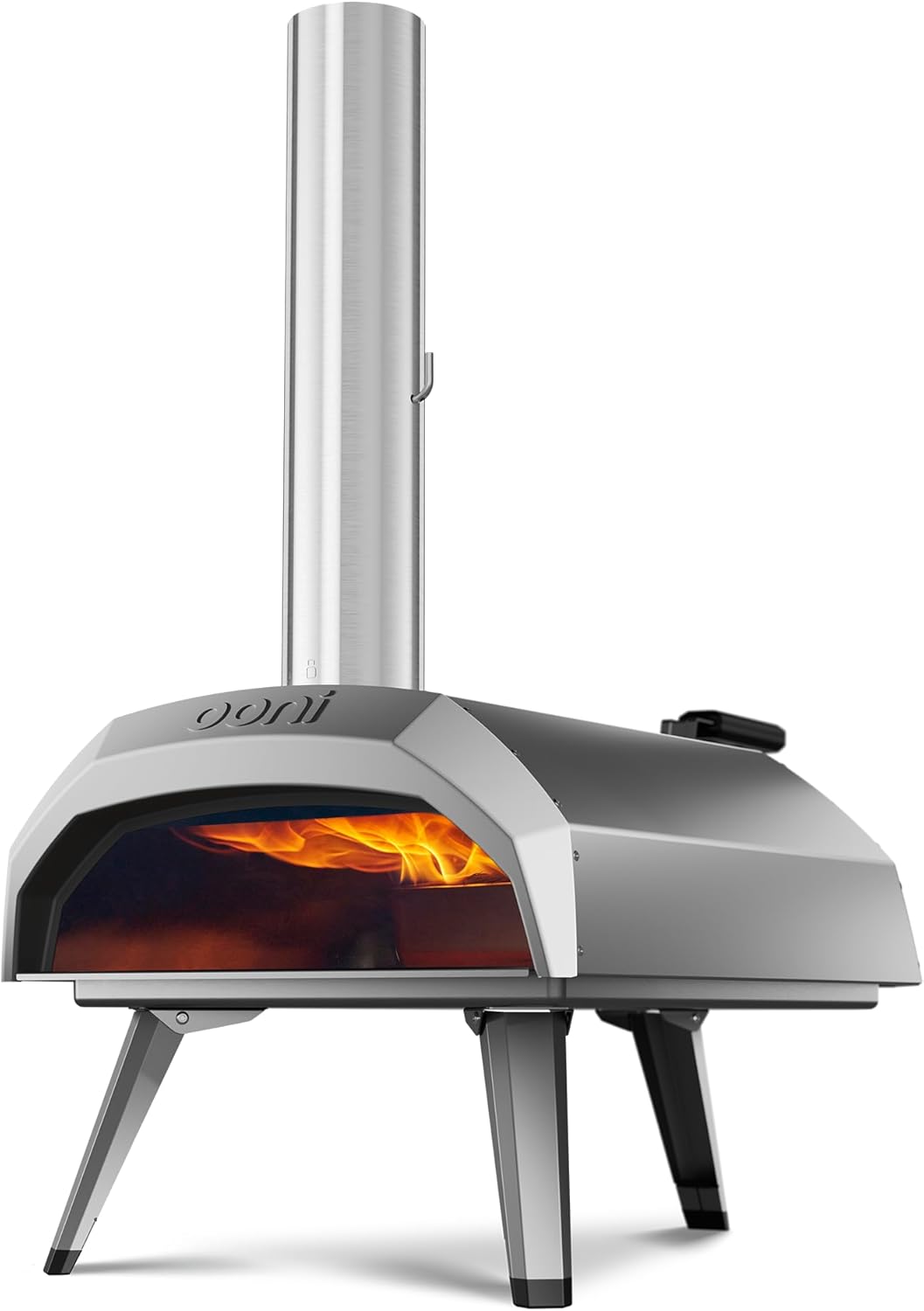
| Ooni Karu 12 🎯 Best Multi-Fuel Outdoor Pizza Oven | Supports fast Neapolitan-style cooks. • Highly portable with fold-down legs • Compact footprint for smaller spaces. | Buy Now | |
| BIG HORN 12" Multi-Fuel Pizza Oven 💰 Best Ultra-Budget Option | High theoretical peak temperature. • Portable design. • Standard entry-level size. | Buy Now | |
| Gozney Tread 🏆 Best Ultra-Portable Outdoor Pizza Oven | Designed to recreate a rolling flame • Easier to carry than many competitors. • Practical for travel and storage. | Buy Now | |
| All-Clad 16" Outdoor Rotating Stone Gas Pizza Oven 🏆 Best Hands-Off Option | Promotes even cooking without • Larger than most portable ovens. • Built-in thermometer and propane | Buy Now | |
| Ooni Koda 2 Pro 🏆 Best Large-Capacity Gas Oven | Supports larger pizzas or multiple • Aimed at more even heat across a • Greater versatility beyond pizza. | Buy Now |




9 Recommended Best Outdoor Pizza Oven for Beginners
Nine research-based candidates compared on features and everyday use
We compared product identity and practical buying criteria from the current Amazon listings. No independent hands-on tests were performed. Confirm the exact variant, dimensions, and care instructions before ordering.
🌟 Key Features That Stand Out
- ✓ G2 Gas Technology: Tapered flame burner designed for more even stone heating and faster recovery between pizzas.
- ✓ 14-inch+ cooking surface: Accommodates typical home-size pizzas with some room to maneuver.
- ✓ Temperature range up to 950°F: Supports 60-second Neapolitan-style cooks when fully preheated.
- ✓ Foldable legs: Improves storage and transport compared with fixed-leg designs.
- ✓ Propane only (hose & regulator included): Simple connection to a standard propane tank.
- ✓ Weight around 35 lbs: Manageable for one person to move when cool.
- ✓ Outdoor use only
💡 Why We Recommend It
🎯 Best For
❌ Cons
- Propane tank required (not included)
🌟 Key Features That Stand Out
- ✓ Demi-dome heating design: Intended to promote efficient heat circulation and faster preheat.
- ✓ Wide panoramic opening: Makes launching and turning pizzas more visible and accessible for new users.
- ✓ Propane operation: Simple dial control; preheats in roughly 15 minutes according to manufacturer claims.
- ✓ Cordierite pizza stone: Supports high-temperature baking.
- ✓ Weight around 30 lbs: Easy for most people to move and store.
- ✓ Stainless-steel construction: Durable outdoor materials.
- ✓ Limited to roughly 12-inch pizzas
💡 Why We Recommend It
🎯 Best For
🌟 Key Features That Stand Out
- ✓ Electric heat up to 700°F: Lower peak than gas models but sufficient for many pizza styles.
- ✓ Five pizza presets: Neapolitan, Thin Crust, Pan, New York, and Custom.
- ✓ No turning required: Even heating design simplifies the cook for beginners.
- ✓ Additional functions: Bake, air fry, proof, and warm expand outdoor utility.
- ✓ 12-inch capacity: Includes pizza stone and bake pan.
- ✓ Outdoor use only: Requires an outdoor-rated power source.
- ✓ Lower max temperature than gas/wood ovens
💡 Why We Recommend It
🎯 Best For
🌟 Key Features That Stand Out
- ✓ Thick stone floor and dense insulation: Excellent heat retention for back-to-back pizzas.
- ✓ Rolling flame design: Promotes even top heat and characteristic blistering.
- ✓ Propane standard; optional wood burner: Flexibility for different flavor profiles.
- ✓ Retractable legs and detachable burner: Improves portability and storage.
- ✓ 12-inch capacity: Focused on high-quality personal or shared pies.
- ✓ Built-in thermometer: Helps monitor readiness.
- ✓ Higher price than basic gas models
💡 Why We Recommend It
🎯 Best For
🌟 Key Features That Stand Out
- ✓ Reaches up to 950°F: Supports fast Neapolitan-style cooks.
- ✓ Lightweight at ~26 lbs: Highly portable with fold-down legs and removable chimney.
- ✓ 12-inch capacity: Compact footprint for smaller spaces.
- ✓ Cordierite stone: Good heat retention for the size.
- ✓ Wood management adds complexity for pure beginners
- ✓ Gas burner is an extra purchase
- ✓ 12-inch size limit
💡 Why We Recommend It
🎯 Best For
❌ Cons
- Wood and charcoal ready out of the box: Optional gas burner sold separately.
🌟 Key Features That Stand Out
- ✓ Claims of up to 1110°F: High theoretical peak temperature.
- ✓ Folding legs and ~25 lb weight: Portable design.
- ✓ 12 x 12-inch stone: Standard entry-level size.
- ✓ Stainless-steel construction: Functional outdoor build.
- ✓ Steeper learning curve
- ✓ Variable consistency reported across budget ovens
- ✓ Optional burners add cost
💡 Why We Recommend It
🎯 Best For
❌ Cons
- Wood-pellet primary fuel: Optional gas and electric burners sold separately.
🌟 Key Features That Stand Out
- ✓ Lateral gas burner: Designed to recreate a rolling flame effect.
- ✓ Lightweight (~30 lbs) with dual top handles: Easier to carry than many competitors.
- ✓ Fast heat-up and cool-down: Practical for travel and storage.
- ✓ 12-inch capacity and built-in thermometer.
- ✓ Modular accessory system: Stand, bag, and roof rack available.
- ✓ 12-inch pizza limit
- ✓ Accessories add significant cost
💡 Why We Recommend It
🎯 Best For
🌟 Key Features That Stand Out
- ✓ 360° automatic rotating stone: Promotes even cooking without constant turning.
- ✓ 16-inch capacity: Larger than most portable ovens.
- ✓ Built-in thermometer and propane operation.
- ✓ Foldable legs and included aluminum peel.
- ✓ Battery-powered rotation motor.
- ✓ Mechanical rotation adds complexity
- ✓ Requires batteries for the motor
💡 Why We Recommend It
🎯 Best For
🌟 Key Features That Stand Out
- ✓ 18-inch-class cooking area: Supports larger pizzas or multiple smaller items.
- ✓ G2 dual-burner system: Aimed at more even heat across a larger stone.
- ✓ Temperature range from roughly 320°F to 950°F: Greater versatility beyond pizza.
- ✓ Optional Bluetooth temperature hub: For more precise monitoring.
- ✓ Heavier (~66 lbs): Less portable than smaller Kodas.
- ✓ Significantly heavier
- ✓ Higher price
💡 Why We Recommend It
🎯 Best For
🏆 Our Top Pick
The best outdoor pizza oven for beginners is the one that matches your space, fuel preferences, and willingness to learn. For most people, a propane model such as the Ooni Koda 2 or Solo Stove Pi Prime delivers the best combination of results and ease. If open flame is restricted, the Ninja Artisan provides a genuinely simple electric path to good outdoor pizza. Those who value refined performance and portability should look at the Gozney Roccbox or Tread.
Prioritize ease of ignition, adequate capacity for your household, and realistic storage plans over maximum claimed temperature. Pair the oven with a good peel, an infrared thermometer, and a reliable dough recipe, and you will be making satisfying homemade pizza far sooner than you expect. Start simple, practice consistently, and upgrade later only if your needs outgrow the oven you choose today.
How to Choose the Best Outdoor Pizza Oven for Beginners
Fuel Type: Gas, Electric, Wood, or Multi-Fuel
Gas (propane) is the most beginner-friendly high-heat option. It lights quickly, maintains steady temperature with a dial, and requires no fuel preparation. Electric models eliminate open flame and simplify temperature control further, though peak temperatures are usually lower. Wood and charcoal deliver distinctive flavor but demand more attention and practice. Multi-fuel ovens offer flexibility but often require extra purchases (gas burners) and still involve a learning curve when using solid fuels. For most beginners, start with gas or electric.
Size and Pizza Capacity
Most portable outdoor ovens handle 12-inch pizzas. Models with 14-inch or 16–18-inch stones give more room to launch and turn, and they support larger pies for families. Measure your available outdoor surface and storage space before choosing. A larger oven is only useful if you will actually make larger pizzas or cook other items regularly.
Heat-Up Time and Maximum Temperature
Look for ovens that reach at least 700–800°F for solid results; 900°F+ is ideal for authentic Neapolitan-style blistering. Preheat times of 15–25 minutes are typical and practical. Faster recovery between pizzas matters if you cook multiple pies in a session.
Ease of Use and Learning Curve
Features that help beginners include: simple ignition, clear temperature controls or built-in thermometers, wide openings for visibility, and designs that reduce the need for constant turning (or that include rotating stones). Avoid models that require frequent fuel adjustments until you have experience.
Portability and Storage
Weight, foldable legs, removable chimneys, and carrying handles all affect how easily you can move and store the oven. If the oven will live permanently on a patio table, weight matters less. If you plan to put it away after each use or take it to gatherings, prioritize lighter models under 35–40 lbs.
Build Quality and Materials
Stainless steel exteriors and thick cordierite stones are common in better models. Insulation quality affects heat retention and exterior temperature. Premium brands generally offer better long-term durability and parts support.
Maintenance and Cleaning
High-heat ovens largely self-clean through pyrolysis (burning off residue). Stones should not be washed with soap and water; scrape them when cool. Exterior stainless steel can be wiped with appropriate cleaners. Factor in whether the stone is removable for easier cleaning.
Budget and Value
Expect to spend more for refined heat distribution, better insulation, larger capacity, and stronger brand support. Ultra-budget models can work but often require more patience and acceptance of variability. Mid-range gas ovens from established brands typically deliver the best balance for beginners.
Warranty and Support
Check warranty length and whether registration extends coverage. Established brands with accessible customer service and readily available replacement stones or burners reduce long-term risk.
Common Buying Mistakes
- Buying the largest or hottest oven without considering storage and skill level.
- Choosing wood-fired only when you mainly want convenience.
- Ignoring the need for a good pizza peel, infrared thermometer, and proper dough recipe.
- Underestimating wind and weather effects on open-front ovens.
- Skipping a cover if the oven will stay outdoors.
Other Buying Guides
Shopping for related gear too? Explore our best Gas Pizza Oven for Home Use, best Infrared Thermometers for Pizza Ovens and best Pizza Oven Accessories Kit guides.
Practical Tips for Getting the Most From Your Outdoor Pizza Oven
- Master a simple dough first. High-hydration Neapolitan-style dough behaves differently from supermarket dough. Practice launching on a countertop before using the hot oven.
- Invest in an infrared thermometer. Many ovens lack precise stone-temperature readouts. Knowing when the stone is truly ready prevents undercooked or burnt results.
- Use a proper pizza peel and semolina or flour. A metal turning peel plus a wooden launching peel makes the process far easier.
- Preheat thoroughly. Rushing the preheat is the most common beginner mistake. Give the stone time to come up to temperature throughout.
- Start with fewer toppings. Overloaded pizzas are harder to launch and cook unevenly at high heat.
- Turn (or rotate) early and often. Unless you have a rotating stone, plan to turn the pizza every 20–30 seconds for even color.
- Protect the oven from weather. Use a fitted cover and store the stone dry to maximize lifespan.
- Practice safety. Keep a clear area around the oven, never leave it unattended while lit, and allow full cool-down before moving or storing.
Gas vs. Electric Outdoor Pizza Ovens
Gas ovens generally reach higher temperatures and produce more intense crust blistering. Electric models offer simpler operation, no fuel tanks, and often more even heating with less turning. If open flame is restricted or you want maximum simplicity, electric is excellent. If authentic high-heat character is the goal, gas is usually preferable.
What Size Outdoor Pizza Oven Do You Need?
For one or two people, a 12-inch oven is usually sufficient. Families or frequent entertainers benefit from 14- to 16-inch (or larger) stones. Remember that usable space is often slightly less than the nominal stone size because of the flame and walls.
Is a Premium Outdoor Pizza Oven Worth It for Beginners?
Premium models typically offer better heat distribution, insulation, build quality, and accessory ecosystems. These traits reduce frustration and improve consistency—valuable for beginners. However, a well-chosen mid-range gas oven can deliver excellent results while you decide how serious your pizza hobby will become.
Common Problems With Outdoor Pizza Ovens (and How to Avoid Them)
- Dough sticking to the peel: Use enough flour or semolina and launch confidently.
- Burnt bottoms / pale tops: Ensure full preheat and turn regularly; adjust flame or position.
- Temperature drop between pizzas: Allow recovery time; better-insulated ovens recover faster.
- Wind interference: Position the oven with the opening away from prevailing wind or use a wind break.