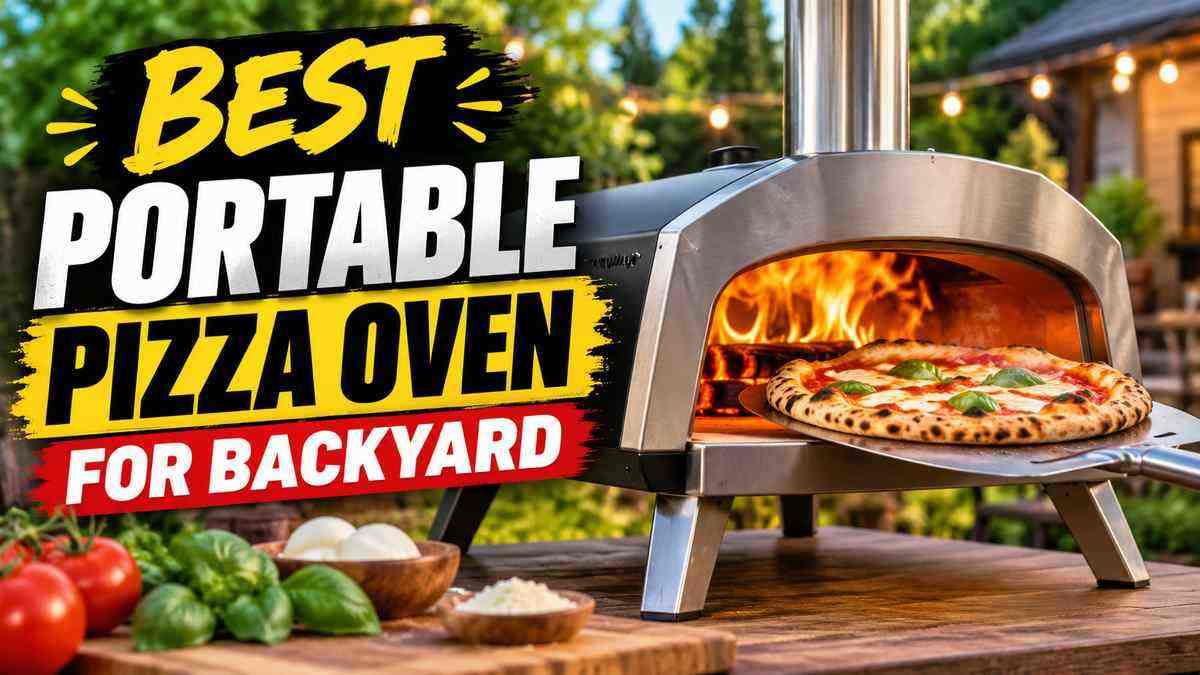
The Best Portable Pizza Oven for Your Backyard: 7 Picks Compared on Real Specs
Choosing the best portable pizza oven for a backyard comes down to fuel, stone size, and weight. Seven ovens compared on verified specs, heat retention, capacity, and the honest trade-offs that decide whether you will actually use it.
Quick Comparison Table
| Image | Product | Key Feature | Buy Now |
|---|---|---|---|
| Ooni Koda 16 🏆 Best Overall | L-shaped gas burner: Flame travels along two walls instead of one point, which spreads heat across the stone and reduces the single hot spot that scorches one edge of a pie. | Buy Now | |
| Ooni Koda 2 Pro 👑 Best Premium | Tapered-flame burner: Ooni's patent-pending redesign is intended to even out heat across a much larger stone, which is the main engineering challenge in an oven this wide. | Buy Now | |
| Ooni Karu 2 🎯 Best Multi-Fuel | Three fuel paths: Wood or charcoal for live-fire flavor, optional gas burner for weeknight speed — one oven, two very different cooking experiences. | Buy Now | |
| Gozney Roccbox 🏆 Best Build Quality | Safe-touch silicone jacket: The outer shell stays cool enough to touch during operation, which is a genuine safety advantage on a patio with kids or dogs. | Buy Now | |
| Gozney Tread 🏆 Most Portable | 29.7-pound frame: Light enough for one person to lift onto a tailgate, into a trunk, or onto a shelf without help. | Buy Now | |
| Solo Stove Pi Prime 💰 Best Value Gas | 304 stainless steel construction: A high heat- and corrosion-resistant grade, which is the right material for an oven that lives outdoors year-round. | Buy Now | |
| Ninja Woodfire 8-in-1 Outdoor Oven 💰 Best Budget | Electric operation: Plugs into a standard outlet, so there is no propane tank to buy, store, or refill — a major practical difference for balconies and covered patios. | Buy Now |


Tested & Recommended Amazon Products
Research-based comparisons • No hands-on testing
This guide compares seven compact ovens on published specifications and independent test reporting. We did not run our own bake tests, so treat the recommendations as research-based editorial judgment rather than hands-on results. Where a number comes from a manufacturer specification sheet or a third-party test, we say so. Where something could not be confirmed, we flag it instead of guessing.
🌟 Key Features That Stand Out
- ✓ L-shaped gas burner: Flame travels along two walls instead of one point, which spreads heat across the stone and reduces the single hot spot that scorches one edge of a pie.
- ✓ 16-inch cordierite stone: A full 16-inch pizza is the stated capacity, so there is working room to rotate a 12-inch pie without clipping the walls.
- ✓ 950°F ceiling: High enough for a 60-to-90-second Neapolitan bake, assuming the stone has been preheated properly.
- ✓ Wide, low mouth: The opening is generous, which makes launching, turning, and retrieving with a peel noticeably less fiddly than on compact 12-inch ovens.
- ✓ Foldable legs and no assembly: Arrives ready to cook; the legs fold for storage and the burner detaches for transport.
- ✓ Gas-only simplicity: No wood to source, no ash to clear, no chimney to store. Ignition is a dial, and heat-up is roughly 15 to 20 minutes.
💡 Why We Recommend It
🎯 Best For
✅ Pros
- 16-inch stone gives real room to launch and rotate pies
- L-shaped burner spreads heat along two walls
- No assembly; folds for storage and transport
- Fast heat-up on a standard propane tank
- Cooks a Neapolitan-style pie in roughly a minute at temperature
❌ Cons
- Propane only — no wood or charcoal option
- No integrated thermometer or digital display
- Hot spots require attention while you learn the flame
- 40 lb and a wide footprint limit true portability
🌟 Key Features That Stand Out
- ✓ Tapered-flame burner: Ooni's patent-pending redesign is intended to even out heat across a much larger stone, which is the main engineering challenge in an oven this wide.
- ✓ 21 × 18-inch stone: Roughly 30% more capacity than the previous generation, enough for 18-inch pizzas, sheet pans, or a cast-iron skillet.
- ✓ Wide 320–950°F range: Turns the oven into a general outdoor cooker for steaks, vegetables, and whole birds, not just a pizza machine.
- ✓ Ooni Connect Bluetooth hub: Ambient oven temperature and a food probe reading appear on your phone, which is a meaningful upgrade for anyone tired of guessing at stone heat.
- ✓ Gas convenience at scale: Dial ignition, no fuel handling, and a heat-up in the same general range as smaller gas ovens.
💡 Why We Recommend It
🎯 Best For
✅ Pros
- Largest usable stone in the Ooni gas lineup
- Expanded 320–950°F range for roasting and baking
- Bluetooth ambient and probe temperature readings
- Still reaches Neapolitan temperatures on propane
❌ Cons
- Highest cost in this comparison
- Large footprint demands dedicated counter space
- Propane only
- Capacity exceeds the needs of most two-person households
🌟 Key Features That Stand Out
- ✓ Three fuel paths: Wood or charcoal for live-fire flavor, optional gas burner for weeknight speed — one oven, two very different cooking experiences.
- ✓ Glass door with ClearView: Borosilicate glass with an airwash effect that limits sooty buildup, so you can monitor browning without losing heat.
- ✓ 45% larger fuel tray: Holds more solid fuel and nests at the back, which produces a more even flame and simplifies ash cleanup after a session.
- ✓ Cast aluminum nose and rear: Powder-coated, weather-resistant shell with insulation intended for outdoor storage and repeated heating cycles.
- ✓ Fold-and-go design: Legs fold, the chimney detaches and stores inside the oven, and 33.6 pounds keeps it a one-person lift.
- ✓ Self-cleaning burn-off: At high temperature, spills carbonize and the stone clears; the fuel tray lifts out for ash disposal.
💡 Why We Recommend It
🎯 Best For
✅ Pros
- Wood, charcoal, and optional gas in one oven
- Glass door lets you watch without losing heat
- 33.6 lb with a chimney that stores inside
- Enlarged fuel tray improves flame consistency
- Lower entry price than premium multi-fuel rivals
❌ Cons
- Gas burner is an extra purchase
- 12-inch pizzas only — slow for a crowd
- Solid fuel requires feeding and monitoring
- Steeper learning curve than a dial-controlled gas oven
🌟 Key Features That Stand Out
- ✓ Safe-touch silicone jacket: The outer shell stays cool enough to touch during operation, which is a genuine safety advantage on a patio with kids or dogs.
- ✓ Double-layer insulated stone floor: Retains heat between bakes, so the second and third pies cook at close to the same speed as the first.
- ✓ Underfloor thermometer: A built-in gauge reads stone temperature directly — more useful than an ambient dial and rare at this size.
- ✓ Rolling flame burner: Gozney's burner design curls flame over the dome to brown the top of a pie while the stone sets the base.
- ✓ Detachable burner and retractable legs: Breaks down into a low-profile package for transport; no assembly required out of the box.
- ✓ Peel included: Ships with a professional-grade pizza peel, which offsets part of the cost against ovens that require one separately.
💡 Why We Recommend It
🎯 Best For
✅ Pros
- Safe-touch jacket keeps the exterior comfortable to handle
- Double-layer stone floor holds heat between pies
- Built-in underfloor thermometer reads stone temperature
- 5-year extended warranty with registration
- Professional peel included in the box
❌ Cons
- 44 lb makes it the heaviest 12-inch oven here
- Wood burner is an additional purchase
- 12-inch capacity may be tight for larger households
- Higher cost per inch of cooking surface
🌟 Key Features That Stand Out
- ✓ 29.7-pound frame: Light enough for one person to lift onto a tailgate, into a trunk, or onto a shelf without help.
- ✓ Roof-rack handles: Molded grab points designed for carrying, not just an aesthetic detail — the oven is meant to be moved loaded.
- ✓ Polymer dock: A protective base that simplifies packing and keeps the underside off wet ground.
- ✓ 950°F capability in a compact body: Insulation is engineered to hit full temperature despite the reduced mass, which is the hard part of lightweight oven design.
- ✓ Venture Stand compatibility: An optional stand turns the Tread into a freestanding setup at a campsite or park where no table is available.
- ✓ Gozney build quality: Stainless construction and the same 5-year registration warranty offered on the Roccbox.
💡 Why We Recommend It
🎯 Best For
✅ Pros
- Lightest oven in this comparison at 29.7 lb
- Purpose-built handles and transport dock
- Still reaches 950°F despite the low weight
- 5-year extended warranty with registration
- Fits small patios and storage closets
❌ Cons
- 12-inch capacity only
- Shorter independent track record than older models
- Venture Stand and some accessories cost extra
- Compact mouth requires careful turning
🌟 Key Features That Stand Out
- ✓ 304 stainless steel construction: A high heat- and corrosion-resistant grade, which is the right material for an oven that lives outdoors year-round.
- ✓ Demi-dome design: The circular, dome-topped chamber is intended to circulate heat around the pie rather than blast it from one direction, improving top-to-bottom browning.
- ✓ 13-inch panoramic opening: Wide enough to see the whole pie and rotate it, which is uncommon at this price point.
- ✓ Roughly 15-minute preheat: Fast enough that a weeknight bake does not require planning an hour ahead.
- ✓ 30-pound body: Light enough to move between patio and storage without help, round enough to fit in a corner.
- ✓ Lifetime warranty: The strongest coverage term in this comparison by a wide margin.
💡 Why We Recommend It
🎯 Best For
✅ Pros
- Lifetime warranty
- Over 950°F peak in a relatively inexpensive oven
- 304 stainless steel built for outdoor exposure
- 30 lb and a round footprint that fits small spaces
- 13-inch panoramic opening for easier turning
❌ Cons
- 12-inch pizzas only
- No wood or charcoal option
- No integrated digital temperature readout
- Fewer accessories and add-ons than the major brands
🌟 Key Features That Stand Out
- ✓ Electric operation: Plugs into a standard outlet, so there is no propane tank to buy, store, or refill — a major practical difference for balconies and covered patios.
- ✓ Five pizza presets: Neapolitan, thin crust, pan, New York, and frozen settings remove the trial-and-error phase for new owners.
- ✓ 700°F ceiling with no-turn baking: Lower than gas rivals, but the enclosed electric chamber bakes a 12-inch Neapolitan in about three minutes without rotating the pie.
- ✓ Woodfire pellet smoke: Half a cup of pellets adds smoke flavor at any temperature, which no gas oven in this list can do.
- ✓ Eight cooking functions: Pizza, max roast, specialty roast, broil, bake, smoke, dehydrate, and keep warm.
- ✓ Large interior: Accommodates a 12-pound turkey, an 8×11 casserole, or a full sheet pan, so it earns counter space beyond pizza night.
💡 Why We Recommend It
🎯 Best For
✅ Pros
- No propane tank — runs on a standard outlet
- Five pizza presets including frozen and pan
- Pellet smoke adds flavor gas ovens cannot
- Eight functions, from dehydrate to roast
- No-turn baking reduces beginner mistakes
❌ Cons
- 700°F limit means no true Neapolitan char
- Heaviest unit here at 49.38 lb
- Requires an outdoor-rated electrical outlet nearby
- 12-inch pizzas only; one-year warranty
🏆 Our Top Pick
How to Choose the Best Portable Pizza Oven for a Backyard
Start With Fuel, Because It Determines Everything Else
Fuel is not a preference, it is a constraint that shapes your entire ownership experience. Propane gives you dial-controlled heat, a fifteen-to-twenty-minute preheat, and no ash — but it requires a tank, which means a place to store one and a refill or exchange habit. Wood and charcoal deliver live-fire flavor and a more theatrical cook, but they require sourcing fuel, building and feeding a fire, and clearing ash afterward; they also produce a wider temperature swing that takes practice to manage. Electricity removes fuel logistics entirely and adds preset programs, at the cost of peak temperature — the Ninja Woodfire tops out at 700°F, which cannot produce the same char as a 950°F gas oven. Pellet ovens sit in between: more convenient than split wood, more flavorful than gas. Decide which of those three trade-offs you will actually tolerate on a random Wednesday, not on a holiday weekend.
Match Stone Size to How Many People You Feed
The stone is the working surface, and it is almost always larger than the stated pizza capacity — a 13.3-inch stone fits a 12-inch pie because you need margin to turn it. A 12-inch oven means roughly one personal pizza per bake, which is fine for two people and slow for six. A 16-inch stone such as the Koda 16 handles a genuinely shareable pie with room to maneuver, while an 18-inch-plus stone like the Koda 2 Pro lets you launch large pies confidently or cook sheet-pan and cast-iron recipes. If you routinely host, capacity is the specification that will annoy you first if you get it wrong. If you cook two pizzas a month, a 12-inch oven is not a compromise at all.
Look at Peak Temperature and, More Importantly, Recovery
950°F is the number to look for if you want Neapolitan-style crust in about 60 to 90 seconds. But peak temperature is only half the story: what separates a good oven from a frustrating one is how fast the stone recovers between pies. A thick, double-layer stone floor with dense insulation — the Roccbox is the clearest example here — holds heat so the third pizza cooks nearly as fast as the first. Thin stones in lightweight ovens cool sharply after each launch and need minutes to rebound. Since few listings publish recovery data, use stone thickness and insulation construction as proxies, and read independent tests that bake multiple pies in sequence rather than one.
Weigh Portability Honestly
"Portable" covers everything from 29 pounds to 49 pounds in this category, and the difference is meaningful. Below about 35 pounds, most adults can lift an oven onto a table or into a trunk without help; above 40 pounds, it becomes a two-hand, deliberate move. Consider the full system, not just the oven: a 20-pound propane tank, a peel, a cover, and a stand all add weight and trips. If the oven will live permanently on a patio, weight mainly matters for seasonal storage. If it needs to travel or go into a closet after each use, treat weight as a primary specification and favor ovens with actual handles and docks, like the Tread.
Check the Footprint Against Your Actual Outdoor Space
An oven needs clearance on all sides for heat and ventilation, plus a stable, non-combustible surface at working height. A wide rectangular oven like the Koda 16 measures about 25 by 23 inches, which will not fit comfortably on a narrow balcony rail table; a round 20.5-inch oven like the Pi Prime will. Verify the manufacturer's clearance requirements before you commit to a spot, and remember that you also need landing space for a peel and a place to set a hot pie down. Nothing derails a pizza night faster than discovering the oven does not fit where you intended to put it.
Decide How Much Temperature Feedback You Want
This is the most underrated buying criterion. A gas oven with no gauge leaves you judging stone heat by eye and by the sound of the flame, which is a skill rather than a feature. Options range from a built-in underfloor thermometer (Roccbox) to a Bluetooth ambient-and-probe hub (Koda 2 Pro) to a simple dial with no readout at all (Koda 16, Pi Prime). If you are new to high-heat cooking, feedback shortens the learning curve considerably and is worth paying for. If you already own an infrared thermometer, a gun pointed at the stone solves the same problem for far less money — which is often the smarter purchase than upgrading ovens.
Assess Build Materials and Weather Resistance
These ovens live outside, so materials matter more than they would on a countertop appliance. 304 stainless steel (Pi Prime, Roccbox) resists corrosion and heat cycling well. Powder-coated carbon steel with cast aluminum ends (Karu 2) is durable but benefits from a cover. Silicone jackets (Roccbox) improve safety on a patio where children or dogs are present. Whatever the material, budget for a fitted cover — it is the cheapest way to extend the life of any oven in this class — and confirm the oven can be stored outdoors in your climate rather than assuming it.
Read the Warranty Before You Read the Reviews
Warranty terms in this category vary from one year to lifetime, which tells you something about the manufacturer's confidence. The Pi Prime carries a lifetime warranty; Roccbox and Tread offer a one-year term that extends to five with registration; the Ninja Woodfire is one year limited. Note the registration windows — several brands require you to register within 60 days to get the extended term, and missing that deadline silently forfeits coverage. Also check what is excluded: stones, burners, and thermometers are commonly treated as wear items, and shipping costs on a 40-pound oven can exceed the value of a minor repair.
Budget for the Accessories You Will Actually Need
The oven is rarely the whole purchase. A turning peel, a launching peel, an infrared thermometer, a cover, and a stand can add a meaningful percentage to the total, and some ovens include items others charge for — the Roccbox ships with a professional peel, while the Karu 2 requires a separate gas burner if you want dual fuel. Before comparing oven prices, list the accessories each includes. A slightly more expensive oven with a peel and cover included can be the cheaper total purchase, and a "budget" oven that needs three add-ons often is not one.
Common Buying Mistakes
The most frequent error is buying a 12-inch oven for a household that regularly feeds more than two people, then discovering that throughput, not quality, is the bottleneck. The second is choosing wood for the romance and then never using it because the fire takes too long on a weeknight — a multi-fuel oven with an optional gas burner hedges this, at added cost. The third is ignoring storage: a 44-pound oven with a chimney is not something you will cheerfully haul out on a whim. The fourth is expecting a portable oven to behave like a built-in brick oven; heat management is manual at this size. The fifth is skipping the cover, which quietly shortens the life of an otherwise good oven.
Practical Tips for Getting the Most From a Portable Pizza Oven
Preheat the stone, not just the air. A gas oven can show a roaring flame while the stone is still well below target. Give it a full 15 to 20 minutes, and if you have an infrared thermometer, aim the beam at the center and the far edge — a large gap between them tells you the oven is not yet even.
Bring dough to room temperature and keep hydration moderate. Cold dough tears on launch and drops stone temperature. For a 60-to-90-second bake, a relatively low-hydration dough handles better than a wet, slack one, because there is no time for excess moisture to evaporate.
Launch with confidence and a dusted peel. Semolina or a light flour dusting on the peel prevents sticking. A hesitant launch is the single most common cause of a folded, toppings-side-down pizza — commit to the motion.
Turn early and often. On a gas oven with a wall-mounted flame, the edge nearest the burner browns first. A quarter turn every 15 to 20 seconds keeps the bake even. On the Karu 2, use the glass door to judge rather than opening the mouth.
Cook fewer toppings than you think you need. A fast bake cannot drive off moisture from a heavily loaded pie. Two or three toppings plus sauce and cheese produces a crisper base than a piled-high version at the same temperature.
Let the stone recover between pizzas. Give it two to three minutes after each pie, or the next one will have a pale, soft bottom. This is where thick, well-insulated stones earn their price.
Clean by burning off, not scrubbing. Most of these ovens self-clean at high temperature. Scrape off solid debris once cool, brush the stone, and empty ash trays or pellet hoppers before storage. Never use water or caustic cleaners on a cordierite stone.
Cover it and store it dry. A fitted cover is the highest-return accessory you can buy. If the oven lives outside, check the burner and hose connections for spider webs and debris at the start of each season — a blocked burner is the most common cause of a weak flame.
Gas vs. Wood vs. Electric: Which Portable Pizza Oven Fuel Is Right for You?
Gas is the default for a reason. It offers immediate, controllable heat, a short preheat, no ash, and consistent results once you learn the flame pattern. It is the right choice for most backyard cooks and the reason the Koda 16 sits at the top of this guide. The limitation is that propane provides no smoke flavor, and you must manage a tank. Wood and charcoal deliver the flavor and theatre of live fire, plus the highest authentic heat, but demand fire management, fuel sourcing, ash cleanup, and a longer learning curve — they suit cooks who consider the fire part of the hobby. Electric is the newest option in portable outdoor ovens: it eliminates fuel logistics and adds preset programs and multi-function cooking, but its ceiling of roughly 700°F produces a different crust style, more akin to a very hot deck oven than a wood-fired dome. Pellet fuel sits between wood and gas, offering smoke with more convenience than split logs. If you cannot decide, a multi-fuel oven with an optional gas burner hedges the bet — you pay more, but you are not locked into one experience.
What Actually Goes Wrong With a Portable Pizza Oven
Most complaints trace back to a handful of causes rather than defects. Pale, soft bottoms usually mean an underheated stone or an overloaded pie. Burnt edges with a raw center point to a stone that is too hot on top and too cool underneath, or a pie positioned too close to the burner. Dough that sticks and tears is a peel technique and flour problem, not an oven problem. A weak or uneven flame on a gas oven is frequently a blocked burner tube, a hose kink, or a tank that is nearly empty — check those before assuming a fault. Cracked stones generally follow thermal shock: a hot stone hit with a cold, wet topping or moved while hot. Chimneys that smoke badly on solid-fuel ovens usually need drier fuel and a cleaner flue. Learning these five failure modes in advance will save more frustration than any specification upgrade.
Final Thoughts: Which Portable Pizza Oven Should You Buy?
The best portable pizza oven for a backyard is the one whose compromises match your routine. If you want a dependable gas oven that handles a full-size pie and lives on the patio, the Ooni Koda 16 is the clearest answer: 16 inches of stone, 950°F, and a burner that spreads heat instead of concentrating it. If budget and flexibility drive the decision, the Ninja Woodfire is the value pick — 700°F will not give you Neapolitan char, but it plugs into a wall, adds smoke, and roasts a chicken, which is a lot of utility for the money. If wood fire is the reason you want an oven at all, the Karu 2 is the honest multi-fuel choice, and the Roccbox is the one to buy if build quality and heat retention matter more than capacity. The single most important consideration is throughput: how many people you feed and how often. Capacity and recovery time determine whether the oven becomes a habit or a shelf ornament. Pick for the nights you will actually cook, add a cover and a thermometer, and the rest is practice.