
Best Stainless Steel Frying Pan for Beginners: 5 Picks Compared
Compare five stainless steel skillets by size, construction, ease of use, care, and value, with practical advice for beginners.
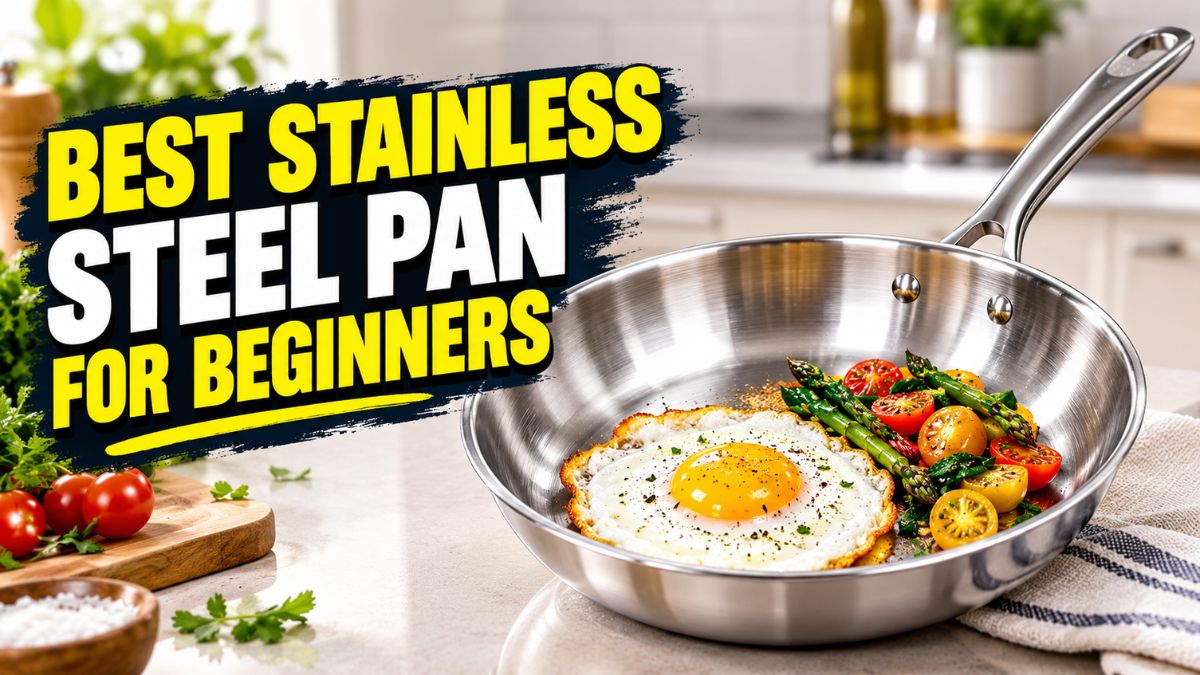
Finding the best stainless steel frying pan for beginners can be challenging when many skillets look almost identical. Some are affordable and practical for everyday meals, while others use layered construction designed to distribute heat more evenly. The right choice depends on your cooking habits, budget, stovetop, and comfort with stainless steel cookware. Unlike a coated nonstick pan, stainless steel requires a little practice. Preheating the pan, adding oil at the right time, and allowing food to release naturally can help reduce sticking. Once you learn these techniques, a stainless steel skillet can be useful for browning meat, sautéing vegetables, preparing pan sauces, and cooking a wide range of everyday dishes. This guide compares five products from Tramontina, Cuisinart, and All-Clad. We consider construction, usability, maintenance, compatibility, and value rather than assuming that the most expensive pan is automatically the best. These recommendations are research-based; no new hands-on testing was conducted for this article.
Quick Comparison Table
| Image | Product | Key Feature | Buy Now |
|---|---|---|---|
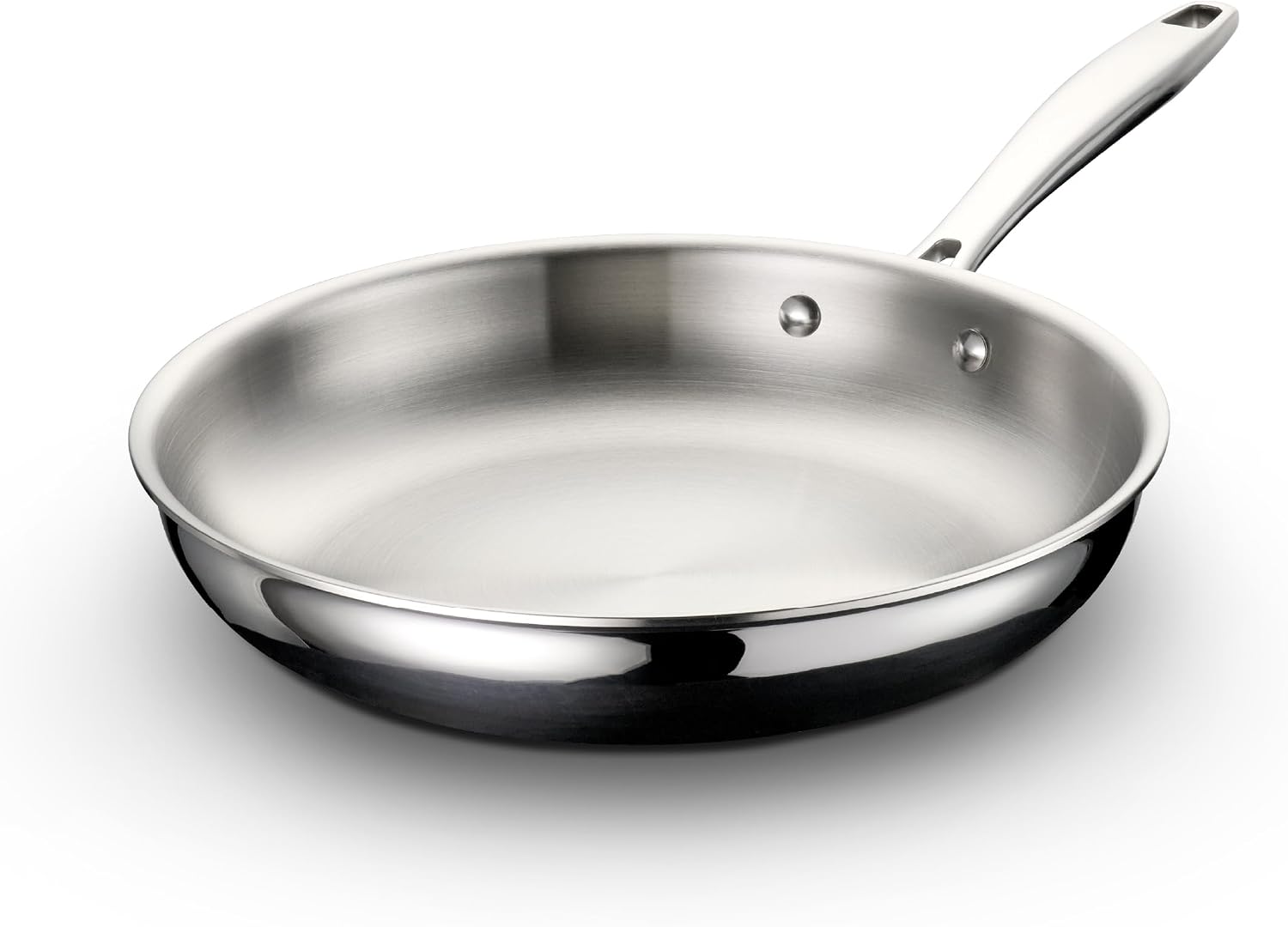
| Tramontina Signature Tri-Ply 10-Inch Fry Pan 👌 Best Overall for Beginners | 10-inch tri-ply clad skillet; everyday beginner size; induction-compatible. | Buy Now | |
| All-Clad D3 12-Inch Fry Pan with Lid 👑 Premium Pan with Lid | 12-inch fully bonded tri-ply pan with matching lid for covered cooking. | Buy Now | |
| All-Clad D3 12-Inch Fry Pan 👑 Premium Lid-Free Skillet | 12-inch fully bonded tri-ply skillet; lid-free format for larger meals. | Buy Now | |
| Cuisinart Chef’s Classic 10-Inch Open Skillet 💰 Budget Everyday Skillet | 10-inch open skillet with aluminum-encapsulated base; model 722-24. | Buy Now | |
| Cuisinart Chef’s Classic 8-Inch Open Skillet 📐 Small Portions | Compact 8-inch open skillet with encapsulated base for small portions. | Buy Now |


Recommended Amazon Products
Research-based recommendations comparing construction, size, intended use, and care. No new hands-on testing was conducted for this article.
🌟 Key Features That Stand Out
- ✓ Tri-Ply Clad Construction: Stainless steel layers with an aluminum core.
- ✓ 10-Inch Format: Useful for everyday portions, vegetables, and modest protein servings.
- ✓ Uncoated Stainless Surface: Suitable for browning and sautéing.
- ✓ Cooktop Compatibility: Listing specifies all cooktops, including induction.
- ✓ Oven and Care: Listing states up to 500°F and dishwasher compatibility; follow exact care instructions.
- ✓ Handle: Riveted stainless steel grip.
💡 Why We Recommend It
🎯 Best For
✅ Pros
- Tri-ply construction
- Useful everyday size
- Versatile cooking surface
- Good starting point for learning stainless steel techniques
❌ Cons
- Food can stick without proper technique
- Not naturally nonstick
- May be small for larger meals
🌟 Key Features That Stand Out
- ✓ Fully Bonded Tri-Ply: Aluminum core between stainless steel layers.
- ✓ 12-Inch Size: More space for multiple portions.
- ✓ Included Lid: Matching stainless steel lid for covered cooking.
- ✓ Cooktop Compatibility: Listing specifies all stovetops, including induction.
- ✓ Oven Use: Listing states up to 600°F; confirm component-specific pan and lid limits.
- ✓ Care: Handwashing recommended.
💡 Why We Recommend It
🎯 Best For
✅ Pros
- Fully clad construction
- Large cooking area
- Lid adds versatility
- Suitable for a range of cooking methods
❌ Cons
- Premium price
- Takes more storage space
- Stainless steel still requires technique
- Handwashing may be recommended
🌟 Key Features That Stand Out
- ✓ Tri-Ply Bonded Design: Stainless steel layers with an aluminum core.
- ✓ 12-Inch Cooking Area: Useful for larger portions.
- ✓ Uncoated Stainless Surface: For searing, sautéing, and deglazing.
- ✓ Cooktop Compatibility: Listing specifies induction and other stovetops.
- ✓ Oven Use: Listing states up to 600°F; follow exact model instructions.
- ✓ Configuration: Lid-free skillet; handwash according to listing.
💡 Why We Recommend It
🎯 Best For
✅ Pros
- Fully clad construction
- Large surface
- Versatile cooking
- No extra lid to store
❌ Cons
- Premium cost
- Larger storage footprint
- May be poor value if the covered version costs nearly the same
🌟 Key Features That Stand Out
- ✓ 10-Inch Format: Moderate portions and everyday stovetop recipes.
- ✓ Model: Chef’s Classic 722-24.
- ✓ Stainless Steel Surface: Uncoated surface for browning and sautéing.
- ✓ Encapsulated Base: Aluminum layer conducts heat through the bottom.
- ✓ Open Skillet: No lid in the identified version.
- ✓ Cooktop and Oven: Listing specifies induction compatibility and oven use up to 500°F; check exact instructions.
💡 Why We Recommend It
🎯 Best For
✅ Pros
- Practical size
- Straightforward design
- Stainless steel surface
- Potentially budget-friendly
❌ Cons
- Not fully clad tri-ply
- No lid in the identified version
- Still requires heat and oil management
🌟 Key Features That Stand Out
- ✓ Compact 8-Inch Size: Small portions and quick side dishes.
- ✓ Model: Chef’s Classic 722-20.
- ✓ Uncoated Stainless Surface: For browning and deglazing with proper technique.
- ✓ Encapsulated Base: Aluminum heat-conducting base.
- ✓ Handle: Riveted stainless steel handle.
- ✓ Cooktop and Oven: Listing specifies induction compatibility and oven use up to 500°F; follow exact care instructions.
💡 Why We Recommend It
🎯 Best For
✅ Pros
- Compact
- Easy to store
- Useful for small portions
- Works as a secondary pan
❌ Cons
- Limited cooking area
- Not ideal for family meals
- Ingredients crowd easily
- Not naturally nonstick
🏆 Our Top Pick
The best stainless steel frying pan for beginners is the one that fits your cooking habits, gives you enough room for everyday meals, and has construction you can comfortably maintain. Our overall starting recommendation is the Tramontina Signature Tri-Ply 10-inch frying pan. It offers a practical size and layered construction for cooks learning to brown, sauté, and prepare everyday dishes.
The Cuisinart Chef’s Classic 10-inch skillet is worth considering if budget matters most, while the 8-inch version suits small portions. For shoppers who want premium fully clad cookware, the All-Clad D3 12-inch skillet is an alternative. Choose the covered version if you will use its lid regularly; otherwise, compare the lid-free model’s current price.
How to Choose the Best Stainless Steel Frying Pan
Choose the Right Size
An 8-inch pan is useful for small portions, a 10-inch skillet is a versatile starting size for many individuals and couples, and a 12-inch pan offers more room for multiple servings. These are practical guidelines rather than strict serving limits; pan shape and usable cooking surface also matter.
Understand Tri-Ply vs. an Encapsulated Base
Tri-ply clad cookware combines stainless steel layers with an aluminum core. In fully clad designs, the layered structure extends through the sides as well as the base. Encapsulated-base cookware concentrates the layered heat-conducting structure at the bottom. Neither construction guarantees perfect results; burner size, heat settings, and technique also matter. If you are comparing uncoated materials for a first skillet, our beginner’s guide to cast iron skillets explains another option with different maintenance needs.
Check Cooktop Compatibility
For induction, the pan needs a compatible magnetic base. For glass-ceramic cooktops, a flat, stable base is helpful. On gas, use a flame that does not extend far beyond the pan’s bottom. Confirm compatibility in the manufacturer’s specifications before ordering.
Consider Handle Comfort and Balance
Choose a handle that feels secure and manageable. A large, thick skillet can feel sturdy but may be difficult to lift when full. Metal handles can become hot, depending on the burner and cooking time, so follow the manufacturer’s safety guidance. When weighing stainless steel against heavier alternatives, our lightweight cast iron skillet comparison discusses handling and heat-retention trade-offs.
Decide Whether You Need a Lid
A lid helps retain heat and moisture for covered recipes, but it is not essential for every frying task. Compare the current prices and included components of covered and lid-free models rather than assuming one version is always better value.
Review Cleaning and Oven Instructions
Cleaning and oven limits vary by model and component. Some manufacturers recommend handwashing, and oven-safe temperatures may differ between a pan and its lid. Follow the exact product instructions and avoid exposing a very hot pan to sudden cold water.
Set a Realistic Budget
A beginner does not automatically need premium cookware. Compare current prices, construction, included accessories, warranty terms, and return policies. Pay for features you expect to use rather than choosing a pan solely because it costs more.
Practical Tips for Stainless Steel Cookware
- Preheat gradually. Start with low-to-medium or medium heat as appropriate for the recipe and stove.
- Add oil at the right time. Once the pan is warm, add oil and let it heat briefly. Avoid letting oil smoke.
- Let food release naturally. Meat may release more readily after a browned surface develops; avoid forcing it loose too early.
- Avoid overcrowding. Cook in batches when needed to leave ingredients room to brown.
- Clean after the pan cools somewhat. Use warm water and a soft sponge, and follow the manufacturer’s instructions.
- Store carefully. Use pan protectors if stacking cookware to reduce scratches.
For a separate skillet focused on meat browning, compare the material and size options in our cast iron skillet guide for steak.
Stainless Steel vs. Nonstick: Which Is Better for Beginners?
Stainless steel is useful for browning, searing, sautéing, and making pan sauces, but food can stick if heat and oil are poorly managed. Nonstick cookware generally makes delicate foods such as eggs and pancakes easier to release, with less technique required. The coating has its own care and temperature limits, so follow the manufacturer’s instructions. Many kitchens benefit from having both types for different tasks.
If breakfast release matters most, our nonstick frying pan comparison for eggs covers small and larger breakfast pans. For a closer look at coating choices and maintenance, read our ceramic nonstick frying pan buying guide.
Is an Expensive Stainless Steel Pan Worth It?
A premium skillet can be worthwhile if you cook frequently and value its construction, handle design, compatibility, and versatility. However, a higher price does not automatically make a pan easier for beginners. A budget-friendly skillet may be the better choice while you learn whether stainless steel suits your cooking style.
Common Stainless Steel Pan Problems
- Food sticks: Review preheating, oil timing, and whether you moved the food too early.
- Rainbow-colored stains: Follow the manufacturer’s guidance for heat-related discoloration.
- Food burns before browning: Reduce heat or cook in smaller batches.
- White spots: Mineral deposits may be responsible; follow approved cleaning instructions.
- Hot handle: Use an appropriate oven mitt and follow the product’s safety guidance.
How We Selected These Products
The five pans were selected from the ASINs supplied for this guide. We compared identifiable product models, cooking-surface size, construction type, intended use, and manufacturer-published information where available. We did not conduct physical cooking tests, independently measure heat distribution, or verify current Amazon prices and stock. Product prices, availability, specifications, and variations may change. Verify the exact model’s compatibility, cleaning instructions, and warranty before purchase. Recommendations are research-based, not a claim of hands-on testing.
Manufacturer references: All-Clad D3 12-inch covered fry pan specifications; Cuisinart Chef’s Classic 722-24 specifications; Tramontina tri-ply clad fry pan construction and care.


