
Best Stainless Steel Saucepan for Sauces: 4 Options Compared
Compare four stainless steel saucepans by capacity, clad construction, lids, handling, cooktop compatibility, and care.
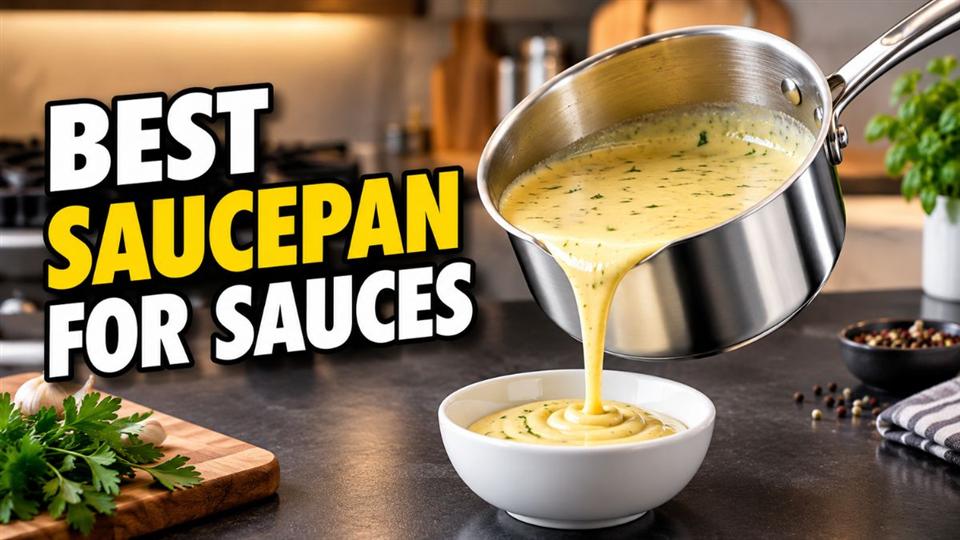
A stainless steel saucepan is useful for simmering sauces, preparing gravy, reducing liquids, and everyday grains or reheating. The right choice depends on batch size, construction, handle comfort, and cooktop fit rather than branding or ply count alone. This guide compares four identified standalone saucepans: All-Clad D3, Cuisinart MultiClad Pro, Cuisinart Chef’s Classic, and Tramontina Signature. Fully clad bodies and encapsulated bases are different approaches, and neither guarantees that a delicate sauce cannot scorch. These are research-based recommendations using current product listings and manufacturer information where available; no hands-on cooking or independent heat tests were conducted. Confirm the exact capacity, supplied model, accessories, heat limits, care instructions, warranty, and current price before buying.
Quick Comparison Table
| Image | Product | Key Feature | Buy Now |
|---|---|---|---|
| All-Clad D3 3-Quart Saucepan with Lid 🏆 Overall Starting Pick | 3-quart fully clad tri-ply saucepan with steel lid; induction-compatible; hand wash. | Buy Now | |
| Cuisinart MultiClad Pro 2-Quart Saucepan 🥈 Two-Quart Clad Alternative | 2-quart triple-ply covered saucepan with tapered rim and riveted handle. | Buy Now | |
| Cuisinart Chef’s Classic 1-Quart Saucepan 📐 Small Batches | Compact 1-quart covered saucepan with aluminum-encapsulated base; small batches. | Buy Now | |
| Tramontina Signature Tri-Ply 2-Quart Saucepan 🏆 Two-Quart Comparison | 2-quart tri-ply clad saucepan with steel lid; induction-compatible; listed oven limit 500°F. | Buy Now |


Recommended Amazon Products
Research-based comparison of four verified standalone saucepans. No physical sauce-making, heat-distribution, or durability tests were performed.
🌟 Key Features That Stand Out
- ✓ Capacity: 3 quarts with stainless steel lid.
- ✓ Construction: Fully bonded tri-ply stainless steel with aluminum core.
- ✓ Cooktops: Includes induction according to listing.
- ✓ Heat Limits: Manufacturer lists oven and broiler use to 600°F; check component instructions.
- ✓ Handling: Riveted stainless handle and flared rim.
- ✓ Care: Current manufacturer guidance specifies hand washing.
💡 Why We Recommend It
🎯 Best For
✅ Pros
- Fully clad tri-ply body
- Useful 3-quart capacity
- Stainless lid included
- Induction compatibility listed
❌ Cons
- Premium purchase cost
- Larger than small-batch pans
- Requires careful heat management
🌟 Key Features That Stand Out
- ✓ Capacity: 2 quarts with cover.
- ✓ Construction: Triple-ply stainless steel with aluminum core.
- ✓ Handle: Riveted cast stainless steel.
- ✓ Rim: Tapered for pouring.
- ✓ Cooktops: Manufacturer page includes induction.
- ✓ Oven and Care: Current manufacturer page states 500°F and dishwasher compatibility; verify exact version.
💡 Why We Recommend It
🎯 Best For
✅ Pros
- Triple-ply body
- Moderate 2-quart capacity
- Cover included
- Tapered pouring rim
❌ Cons
- Less capacity than a 3-quart pan
- Grip comfort is personal
- Check exact manual heat limits
🌟 Key Features That Stand Out
- ✓ Model: Chef’s Classic 719-14.
- ✓ Capacity: 1 quart with stainless steel lid.
- ✓ Heating Design: Aluminum-encapsulated base; not fully clad sidewalls.
- ✓ Surface: Uncoated stainless steel.
- ✓ Cooktops: Listing includes induction, gas, electric, and glass.
- ✓ Oven Use: Listing states up to 500°F.
- ✓ Care: Gentle hand washing advised; dishwasher-compatible listing.
💡 Why We Recommend It
🎯 Best For
✅ Pros
- Compact size for small portions
- Stainless lid included
- Induction compatibility listed
- Encapsulated aluminum base
❌ Cons
- Limited capacity for family batches
- Base-only conductive structure
- Heat control still necessary
🌟 Key Features That Stand Out
- ✓ Capacity: 2 quarts with stainless steel lid.
- ✓ Construction: Tri-ply clad steel with aluminum core.
- ✓ Cooktops: Induction, gas, electric, and ceramic glass listed.
- ✓ Oven Use: Listing states up to 500°F.
- ✓ Handle: Riveted stainless steel.
- ✓ Care: Dishwasher-compatible listing; follow manual.
💡 Why We Recommend It
🎯 Best For
✅ Pros
- Fully clad tri-ply body
- Compact 2-quart capacity
- Stainless lid and riveted handle
- Induction compatibility listed
❌ Cons
- Limited room for large batches
- Weight and grip need personal assessment
- Value depends on current price
🏆 Our Top Pick
How to Choose a Stainless Steel Saucepan
Choose capacity for the batch
A 1-quart pan is useful for butter, small amounts of gravy, or reheating a portion. Two quarts offers more room for everyday sauces and grains, while three quarts accommodates larger batches. Leave headroom for stirring and bubbling; nominal capacity is not a recommended fill level. If you also need skillets and a stockpot, our stainless steel cookware set comparison for a $200 budget helps assess buying a set versus a standalone saucepan.
Understand fully clad and encapsulated bases
Fully clad cookware carries a conductive core through the base and sides. Encapsulated-base pans concentrate that structure at the bottom. Both can be useful; thickness, burner fit, recipe, and technique matter alongside construction. More layers do not guarantee that sauces will never scorch. Our stainless steel cookware guide for beginners explains similar construction and heat-control trade-offs in skillets.
Assess grip, weight, and pouring
Check the weight when filled, handle shape, attachment, and clearance in your cabinets. A flared or rolled rim may help direct liquids, but pouring control depends on your grip and the sauce. Metal handles can become hot. Use suitable protection and do not treat stay-cool marketing as a promise under all conditions.
Compare lids and heat restrictions
Glass lids offer visibility; steel lids are opaque and have different handling characteristics. Check the pan, lid, and handle limits separately, including whether broiler use is permitted. A secure-fitting lid helps covered cooking, while uncovered reduction lets moisture escape. Neither approach is right for every sauce.
Verify cooktop compatibility
Induction needs a suitable magnetic base of sufficient diameter for the zone. A magnet is a preliminary check, not a complete performance guarantee. Follow both the saucepan and cooktop manuals. Our induction cookware comparison explains base compatibility and includes a coated saucepan alternative if you are weighing surface types.
Compare care, warranty, and current cost
Some makers allow dishwashers and others specify hand washing. Read the exact model’s instructions, warranty exclusions, seller eligibility, and return policy. A higher price does not prove better sauces or immunity from damage. Buy construction and capacity that solve a practical need.
Practical Tips for Sauces
- Use the heat and starting method suited to the recipe. Milk, custards, roux, and reductions do not all need the same dry-preheating routine.
- Reduce heat when a sauce reaches its intended simmer, and stir or whisk as the recipe requires.
- Reach the corners and base while stirring thick mixtures, adjusting heat if residue begins to scorch.
- Use a lid when retaining moisture is intended and cook uncovered when the recipe calls for reduction.
- After browning, loosen suitable browned fond with liquid carefully. Blackened residue is not a good foundation for a sauce.
- Allow cookware to cool before washing and avoid sudden cold water on a hot pan.
- Use approved nonabrasive cleaning methods, then dry to limit water spots.
For sauces made from meat drippings directly in a skillet, our stainless steel pan guide for steak and pan sauces compares that broader, shallower cooking format.
Stainless Steel vs. Nonstick for Sauces
Uncoated stainless steel is useful for stirring, browning, and deglazing and is commonly used with tomato or wine-based recipes. It is not naturally nonstick or indestructible. Coated saucepans may simplify release for some foods, but have their own utensil, cleaning, and temperature restrictions. Follow each product’s directions rather than making blanket claims about coating safety, lifespan, or acid resistance.
Cleaning and Common Problems
Sauce sticks or scorches
Review heat, stirring, batch size, and recipe order. No ply count eliminates scorching. A delicate sauce may require gentle heating or a double boiler rather than a hotter saucepan.
Rainbow tint or white marks appear
Heat tint and mineral deposits can create cosmetic marks. Start with the maker’s recommended cleaning method. Use a cleaner or vinegar only where approved, following its label; distinguish deposits from pitting or other damage.
Burnt residue remains
Let the pan cool, then use warm soapy water and a nonabrasive sponge. Follow approved soaking or cleaning instructions rather than aggressive steel-wool scouring. Contact the manufacturer if damage or distortion is present.
How We Selected These Saucepans
The original ASIN inventory did not identify the described standalone saucepans, so it was replaced with four verified options. We compare identifiable capacities, construction, lids, handles, compatibility, care, and intended use. Product listings were checked and manufacturer documentation consulted where available. We did not conduct hands-on sauce-making tests, heat maps, long-term durability tests, or current customer-rating checks. Use-case labels are editorial guidance rather than measured awards.
Final Buying Advice
Start with the capacity you will actually use. All-Clad D3 is our starting recommendation for a 3-quart fully clad pan, Cuisinart MultiClad Pro and Tramontina offer 2-quart clad comparisons, and Cuisinart Chef’s Classic fills a small 1-quart role. Check exact model, supplied version, heat restrictions, warranty, and current total price before purchase.


