Best Pizza Steel for Home Oven: 10 Picks Ranked for Crust, Fit, and Value
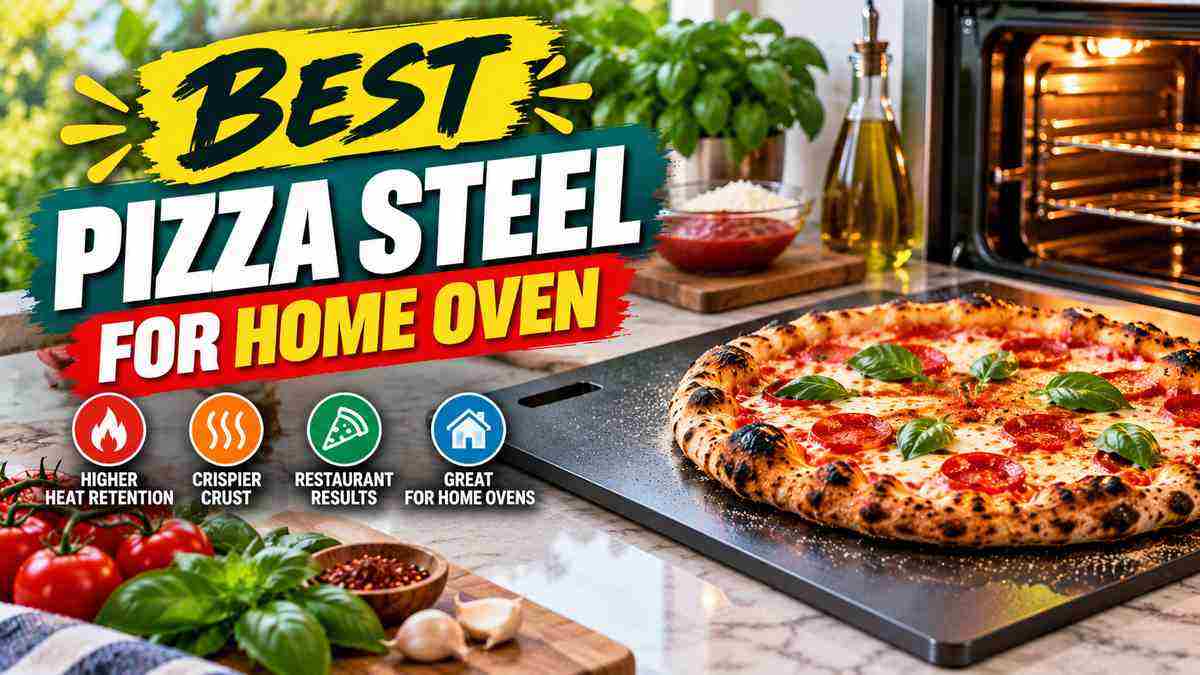
The best pizza steel for home oven baking depends less on brand than on thickness, plate size, and weight. This guide compares ten carbon-steel plates, explains 1/4-inch versus 3/8-inch heat retention, checks standard-oven fit, and covers preheating, seasoning, and safe handling.
Quick Comparison Table
| Image | Product | Key Feature | Buy Now |
|---|---|---|---|
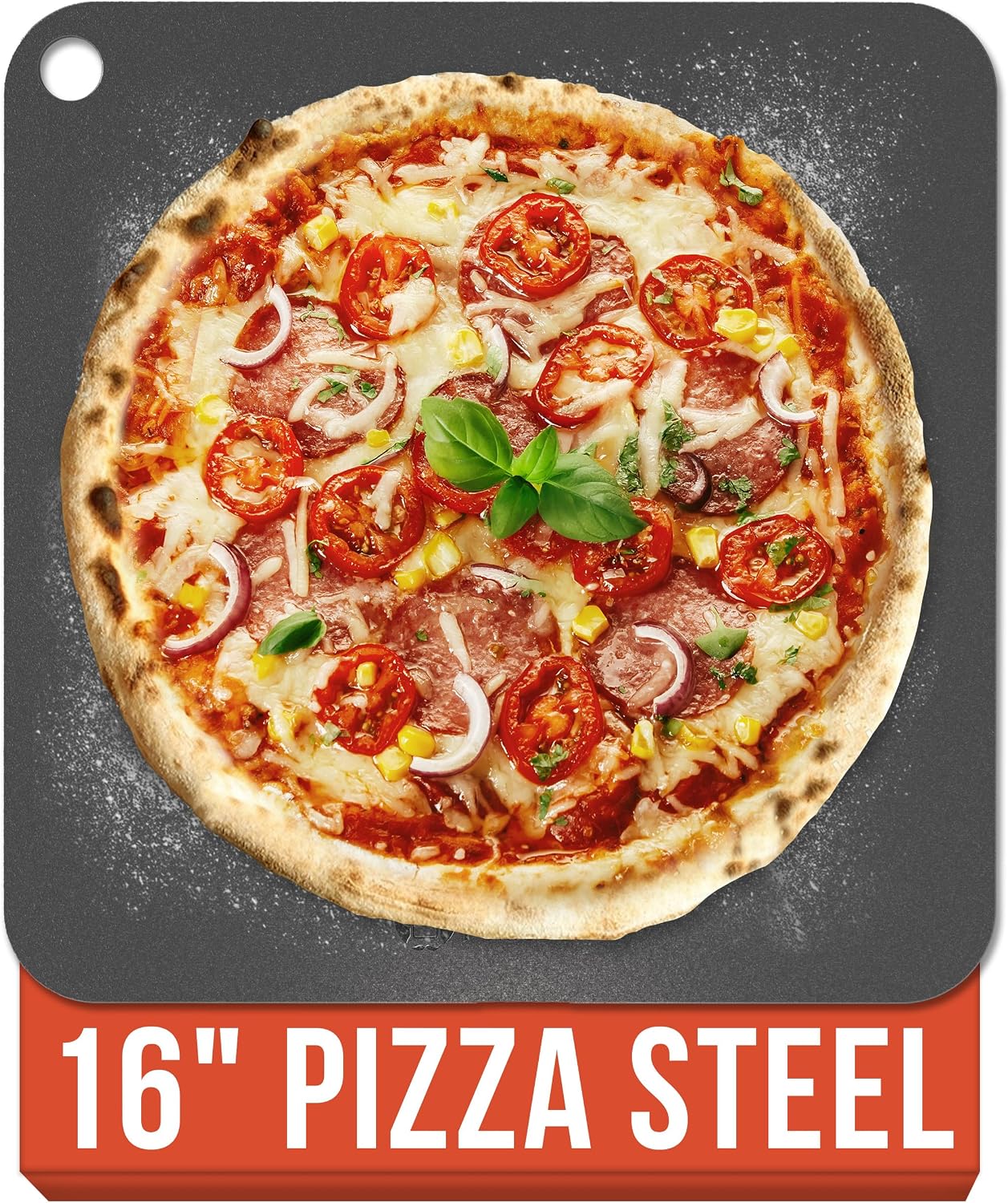
| Baking Steel Original 14" × 16" 🏆 Best Overall Pizza Steel for Most Home Ovens | Quarter-inch carbon-steel plate: Thick enough to store meaningful thermal mass while staying light enough for one person to move — the balance most buyers should start with. | Buy Now | |
| Chef Pomodoro 14" × 12", 1/4" 💰 Best Budget Pizza Steel for Small Ovens | Compact 14 × 12 in surface: Sized for small ovens and narrow racks where a full 16-inch plate will not fit. | Buy Now | |
| NerdChef Steel Stone, Ultimate 1/2" 👑 Best Premium Pizza Steel for Maximum Heat | Half-inch steel plate: The greatest thermal mass in this guide, for maximum stored heat under a fast bake. | Buy Now | |
| ThermiChef 16" × 16", 3/8" 🏆 Best Pizza Steel for Consecutive Bakes | 3/8-inch steel slab: Substantially more stored heat than a quarter-inch plate, which is the single biggest factor in keeping the third and fourth pies as dark as the first. | Buy Now | |
| NerdChef Steel Stone, Standard 🥈 Best Runner-Up Quarter-Inch Steel | Quarter-inch low-carbon steel: Same heat-transfer class as the market leader at an equivalent thickness. | Buy Now | |
| Dough-Joe The Samurai 15" × 15" 🏆 Best Square Plate for Patterned Crusts | 15 × 15 in square plate: A square footprint makes peel alignment and pie centering easier than a slightly wider rectangle. | Buy Now | |
| ThermiChef 16" × 16", 1/4" 💰 Best Value Large-Format Pizza Steel | 16 × 16 in quarter-inch plate: The largest surface area here at a weight most adults can still manage. | Buy Now | |
| Chef Pomodoro 16" × 16", 1/4" 💰 Best Large Plate on a Budget | Full 16 × 16 in baking area: Equivalent footprint to premium large plates, enough for a 14-inch pie with margin. | Buy Now | |
| Primica Pizza Steel XL 16" × 13.4" 🏆 Best Slim-Fit Plate for Oven and Grill | 16 × 13.4 in rectangle: A shallower plate that fits where a 16-inch square will not, including narrower ovens and grill layouts. | Buy Now | |
| A36 Steel Plate, 1/4" × 16" × 16" 💰 Best Raw-Steel Value for Confident DIYers | Genuine quarter-inch A36 steel: Meets the thickness standard independent testers identified as necessary for even heat. | Buy Now |




Tested & Recommended Amazon Products
Research-based comparisons • No hands-on testing
In this guide
🌟 Key Features That Stand Out
- ✓ Quarter-inch carbon-steel plate: Thick enough to store meaningful thermal mass while staying light enough for one person to move — the balance most buyers should start with.
- ✓ Pre-seasoned and oven-ready: Seasoned with organic flax oil and baked before shipping, so it can go straight into the oven rather than being oiled and baked repeatedly at home.
- ✓ 14 × 16 in baking surface: Large enough to launch a full-size home pizza with room for turning, and small enough for standard racks.
- ✓ Fast, even heat-up: In independent testing it reached its full heat potential in about 30 minutes at a 500°F oven setting, averaging roughly 517°F across the surface.
- ✓ Dual-purpose surface: Works for pizza, crusty bread, sourdough, and pie bottoms — a genuine versatility advantage over single-purpose cookware.
- ✓ Made in the USA, backed for life: Per the manufacturer, the plate is produced in the United States and carries a lifetime backing; coating-free construction means nothing to wear out.
- ✓ No coatings to fail: Because it is bare seasoned steel rather than a coated pan, there is no nonstick layer to degrade.
💡 Why We Recommend It
🎯 Best For
✅ Pros
- Quarter-inch plate balances heat storage against manageable 16-pound weight
- Ships pre-seasoned, removing the most common first-use mistake
- Confirmed winner or favorite in two independent equipment reviews
- 14 × 16 in surface fits standard home-oven racks
- Dual-purpose for bread, sourdough, and pie crusts
- Made in the USA with no coating to wear out
❌ Cons
- Costs more than unbranded plates of the same thickness and size
- Not ideal for high-volume back-to-back baking
- Smaller than a 16-inch square, so very large pies are out of reach
🌟 Key Features That Stand Out
- ✓ Compact 14 × 12 in surface: Sized for small ovens and narrow racks where a full 16-inch plate will not fit.
- ✓ Quarter-inch thickness: Meets the thickness threshold independent testers identified as necessary for even heat distribution.
- ✓ Lifting holes: A practical handling feature that gives you a reliable grip point when moving a heavy steel plate in and out of a hot oven.
- ✓ Lower entry point than flagship plates: The compact size and listing price make it the least expensive way to test whether steel suits your baking.
- ✓ Single-pie focus: At this size the plate handles one 10- to 12-inch pie at a time, which is honest for its intended use.
- ✓ Fast to preheat: Less steel volume than a 16-inch square means it reaches temperature sooner.
💡 Why We Recommend It
🎯 Best For
✅ Pros
- Fits small and narrow ovens that cannot take a 16-inch plate
- Quarter-inch steel preserves the core heat-transfer advantage
- Lifting holes make hot-plate handling noticeably safer
- Lowest-cost way to test whether steel suits your baking
- Preheats faster than large-format plates
❌ Cons
- One 10- to 12-inch pie at a time; no side-by-side baking
- Weight not stated in the listing, so handling is unknown until it arrives
- Grade and pre-seasoning status not itemized
🌟 Key Features That Stand Out
- ✓ Half-inch steel plate: The greatest thermal mass in this guide, for maximum stored heat under a fast bake.
- ✓ Footprint not published in the listing: Plate dimensions were not stated for this variant, so measure your rack and confirm size with the seller before ordering.
- ✓ Three-tier line with shared geometry: Standard, Pro, and Ultimate share a footprint, and one independent test honored the Standard as a co-winner, validating the underlying design.
- ✓ Aiming at wood-fired crust character: The thermal case for thick plates is stronger oven spring and surface blistering, driven by more aggressive bottom heat.
- ✓ Performance at high heat: Manufacturer guidance recommends the thickest plates for high-heat applications above roughly 550°F, where stored heat matters most.
- ✓ Bread and pizza versatility: Like the thinner variants, it doubles as a bread and sourdough surface.
💡 Why We Recommend It
🎯 Best For
✅ Pros
- Maximum thermal mass in a standard-oven footprint
- Best retention across a long series of back-to-back bakes
- Part of a line whose thinner variant was independently honored
- Underlying design independently honored in the thinner version
- Suits ovens that reach and hold 550°F or higher
❌ Cons
- Substantially heavier than quarter-inch plates — exact weight unverified
- Longest preheat requirement of the plates in this guide
- Premium price for a benefit occasional bakers will not notice
🌟 Key Features That Stand Out
- ✓ 3/8-inch steel slab: Substantially more stored heat than a quarter-inch plate, which is the single biggest factor in keeping the third and fourth pies as dark as the first.
- ✓ 16 × 16 in footprint: One of the largest flat baking surfaces in this guide, useful for big pies and for launching two smaller ones.
- ✓ About 27.5 lb: The weight penalty is real — this is a two-hand, deliberate lift rather than a quick grab.
- ✓ Works as a stovetop and grill surface: The large plate can double as a flat top on a wide burner or grill, per the manufacturer’s intended usage.
- ✓ Recommended as a value alternative to premium steels: A recent independent roundup highlighted the ThermiChef line as the option to consider when the flagship brand costs roughly twice as much.
- ✓ Available in a matching quarter-inch version: The same 16-inch square is offered at 1/4 inch for buyers who want the footprint without the weight.
💡 Why We Recommend It
🎯 Best For
✅ Pros
- 3/8-inch thickness stores markedly more heat than quarter-inch plates
- Best-in-guide performance for consecutive pizzas without a long pause
- Large 16 × 16 in surface for big pies or two small ones
- Well suited to ovens that reach and hold 550°F or higher
- Flagged as a lower-cost alternative to the flagship brand in independent coverage
- Same footprint available in a lighter quarter-inch version
❌ Cons
- Roughly 27.5 lb — heavy to lift, position, and store
- Longer preheat than thinner plates before it is fully saturated
- Material and country of origin not itemized in the reviewed listing
🌟 Key Features That Stand Out
- ✓ Quarter-inch low-carbon steel: Same heat-transfer class as the market leader at an equivalent thickness.
- ✓ 14.5 × 16 in surface: Marginally larger than the Original in one dimension, giving slightly more landing room for a large pie.
- ✓ Three thickness tiers in one line: The Standard, Pro (3/8 in), and Ultimate (1/2 in) share the same footprint, which simplifies upgrading later.
- ✓ Independent test validation: Named co-winner in America’s Test Kitchen’s steel-and-stone evaluation, producing what testers described as perfectly charred exteriors with tender interiors.
- ✓ Bread and pizza versatility: Testers also baked crusty bread on it and evaluated crust height, browning, and crispness.
- ✓ Condition held up under testing: The evaluation included an assessment of each plate’s condition at the end of testing.
💡 Why We Recommend It
🎯 Best For
✅ Pros
- Quarter-inch low-carbon steel with the same heat class as our top pick
- Independent co-winner alongside the Original Baking Steel
- Slightly wider 14.5 × 16 in surface than the Original
- Standard, Pro, and Ultimate share one footprint for easy upgrading
- Versatile enough for bread, not just pizza
❌ Cons
- No clear performance advantage over the Original Baking Steel
- “Made in USA” is a listing claim rather than an independently verified fact here
- Like every quarter-inch plate, it loses heat on consecutive bakes
🌟 Key Features That Stand Out
- ✓ 15 × 15 in square plate: A square footprint makes peel alignment and pie centering easier than a slightly wider rectangle.
- ✓ Quarter-inch carbon steel: The thickness class that independent testers identified as the practical minimum for even heat.
- ✓ Highest measured preheat temperature in review testing: Recorded 560°F during preheating, and held heat well enough to keep browning the crust after the pizza was launched.
- ✓ Pre-seasoned finish: Sold ready to use, so no initial oiling and baking cycle is required.
- ✓ Dishwasher-safe claim in the listing: Note that the manufacturer’s own care guidance for steel plates generally favors hand drying; treat “dishwasher safe” as a listing claim and dry immediately regardless.
- ✓ Multi-purpose flat top: Suitable for bread, flatbreads, and stovetop-style griddle cooking where the plate fits a burner or grill.
💡 Why We Recommend It
🎯 Best For
✅ Pros
- 225 square inches of baking surface in a standard rack width
- Recorded the highest preheat temperature of the reviewed steels
- Held heat through the bake for consistent browning
- Square edges simplify peel alignment and pie centering
- Pre-seasoned and made in the USA per the listing
❌ Cons
- 15-inch square may not clear every oven rack or door
- Listing’s “dishwasher safe” claim runs against standard steel care guidance
- No size advantage for round pies over a comparable rectangle
🌟 Key Features That Stand Out
- ✓ 16 × 16 in quarter-inch plate: The largest surface area here at a weight most adults can still manage.
- ✓ About 17.6 lb: Noticeably lighter than the 3/8-inch version of the same plate, which makes routine insertion and removal far less awkward.
- ✓ Squared format: Straight edges make it easy to line up a peel and to bake two smaller pies side by side.
- ✓ Reinforces the quarter-inch standard: Independent testers recommended plates at least a quarter inch thick for even heat, which this plate satisfies.
- ✓ Cited as the lower-cost route to established steel performance: Independent coverage recommended the ThermiChef line for buyers who want proven dimensions without flagship pricing.
- ✓ Same footprint scales up: If you later want more stored heat, the matching 3/8-inch plate uses the identical 16-inch footprint.
💡 Why We Recommend It
🎯 Best For
✅ Pros
- Largest 16 × 16 in surface in this guide
- About 17.6 lb, far easier to handle than a 3/8-inch slab
- Squared edges simplify peel work and pie placement
- Recommended as a lower-cost route to established steel performance
- Shares its footprint with the thicker 3/8 in version
❌ Cons
- Stores no more heat than any other quarter-inch plate
- Steel grade and pre-seasoning state not itemized in the listing
- 16-inch square will not fit narrow oven racks
🌟 Key Features That Stand Out
- ✓ Full 16 × 16 in baking area: Equivalent footprint to premium large plates, enough for a 14-inch pie with margin.
- ✓ Quarter-inch thickness: Sits in the thickness class independent testers recommended as the practical minimum.
- ✓ Lifting holes: Grip points that reduce the awkwardness of moving a large, hot steel plate.
- ✓ Budget positioning: Delivers large-format surface area below the price of flagship brands.
- ✓ Room for two small pies: The square can hold a pair of 10-inch rounds if you offset them carefully.
- ✓ Straight-edge geometry: Squared corners simplify peel alignment and pie centering.
💡 Why We Recommend It
🎯 Best For
✅ Pros
- Full 16 × 16 in baking area at a value price
- Quarter-inch thickness preserves core steel performance
- Lifting holes improve safety when handling a large hot plate
- Square format simplifies launching large and paired pies
❌ Cons
- Weight, steel grade, and pre-seasoning not stated in the listing
- 16 inches leaves less rack clearance than a 14-inch plate
- No documented third-party test results for this model
🌟 Key Features That Stand Out
- ✓ 16 × 13.4 in rectangle: A shallower plate that fits where a 16-inch square will not, including narrower ovens and grill layouts.
- ✓ Carbon-steel construction: The same material class that gives steel its conductive advantage over ceramic.
- ✓ Designed for oven and grill use: A dual-surface concept for buyers who want one plate for both indoor baking and outdoor searing.
- ✓ Marketed as a stone and pan alternative: Positioned explicitly against ceramic stones, in the same congestion-relieving role.
- ✓ Useful for oblong and flatbread bakes: The shallow rectangle suits rectangular flatbreads, focaccia, and Detroit-style pans.
- ✓ Compact storage profile: Easier to store on its edge in a cabinet than a 16-inch square.
💡 Why We Recommend It
🎯 Best For
✅ Pros
- Shallow rectangle fits ovens and grills where a 16-inch square will not
- Carbon steel retains the conductivity advantage over ceramic stones
- Works for oven and grill use from a single plate
- Well suited to flatbreads, focaccia, and pan-style pizzas
- Compact storage profile compared with large squares
❌ Cons
- Thickness not stated in the listing — verify before buying
- 13.4-inch depth limits maximum round pie size
- Weight and pre-seasoning status also unstated
🌟 Key Features That Stand Out
- ✓ Genuine quarter-inch A36 steel: Meets the thickness standard independent testers identified as necessary for even heat.
- ✓ 16 × 16 in square: Full large-format surface area for big pies or two smaller ones.
- ✓ Rounded corners: Reduces the sharp-edge problem that raw stock plates often have.
- ✓ Lowest cost route to steel baking: You are buying the material rather than a finished, seasoned kitchen product.
- ✓ Requires home seasoning: Expect to oil and bake it before first use, following standard carbon-steel seasoning practice.
- ✓ Indestructible material class: Bare low-carbon steel has no coating to degrade; with dry storage it can last indefinitely.
💡 Why We Recommend It
🎯 Best For
✅ Pros
- Lowest price per pound of genuine quarter-inch steel
- 16 × 16 in large-format surface with rounded corners
- A36 low-carbon steel matches the material class of branded plates
- Bare steel has no coating to degrade, and it can last indefinitely with dry storage
❌ Cons
- Ships unseasoned; you must oil and bake it before first use
- Sold as metal stock, not as certified cookware; no food-contact documentation stated
- Weight unstated, and finish quality varies compared with finished plates
- Not suitable for a buyer who wants to cook immediately out of the box
🏆 Our Top Pick
How to Choose the Best Pizza Steel
A pizza steel is one of the few kitchen tools where the important specifications are all numbers, which makes the buying decision refreshingly checkable. Thickness, plate size, weight, steel grade, and finish state are the five variables that determine how a plate performs, how long it takes to preheat, and how pleasant it is to own. The sections below walk through each one, the trade-offs involved, and what to look for.
Thickness: 1/4-Inch, 3/8-Inch, or 1/2-Inch Steel
Thickness is the single most consequential specification, because it controls both how much heat the plate stores and how quickly it saturates. Independent testers at Serious Eats explicitly preferred plates at least a quarter inch thick, noting that thicker steel produced more even heat. Industry guidance splits the range into three usable tiers. A thickness guide from Cooking Steels frames 3/16-inch as the casual, fast-preheating option, 1/4-inch as the all-around choice that balances retention and transfer, and 3/8-inch as the heavy-duty option for high-volume baking and for ovens running above roughly 550°F.
What this means in practice: buy 1/4 inch if you bake one or two pizzas at a time and want a plate you can handle alone; buy 3/8 inch if you routinely bake several pies per session, since more mass means each successive pie starts on a hotter surface; consider 1/2 inch only if you have already decided that maximum thermal mass is your priority and you accept the weight and preheat time. Thinner than 1/4 inch, you begin losing the heat-transfer advantage that justifies steel in the first place.
Plate Size and Oven Fit
Measure before you buy. Rack width, rack depth, and the door swing are all constraints, and a plate that overhangs the rack or blocks the door will be returned. The common sizes are 14 × 12 inches for compact ovens, 14 × 16 inches for standard racks, and 16 × 16 inches for maximum area. Two practical rules: choose a plate at least two inches wider than your dough so you can launch and turn comfortably, and prefer a rectangle or square over a round plate. King Arthur Baking recommends getting a rectangular steel or stone “as big as can fit in your oven,” because rectangular slabs are more versatile for bread and easier to launch onto than round ones. Leave clearance at the back wall and the door, and check that the rack itself can take the load.
Material and Steel Grade
Nearly every plate in this category is low-carbon steel. Baking Steel describes its plates simply as solid carbon steel, and community comparisons note that the leading brands use the same general A36 low-carbon plate stock. That is good news for buyers: you are not paying a premium for exotic metallurgy, you are paying for finishing, seasoning, dimensions, and support. Beware of stainless-steel plates marketed on durability — stainless conducts heat less readily than low-carbon steel, which works against the purpose of the plate. Also be skeptical of weightless marketing language like “premium conductivity”: conductivity is a property of the material, and the number that actually varies between products is thickness.
Pre-Seasoned Versus Raw Steel
Raw steel rusts. A finished plate arrives oiled and seasoned; a raw plate does not. Baking Steel states that each of its plates is seasoned by hand with organic flax oil and baked before shipping, whereas “a raw steel plate has to be oiled and baked at home before you can cook on it, usually more than once.” This is the difference between a first pizza that evening and a weekend project. If you buy raw stock — and the A36 plate in this guide is exactly that — budget time to scrub off mill residue, dry the plate completely, apply a thin oil film, and run one or more seasoning bakes. If you want to cook immediately, pay for the finished product.
Heat Recovery and How Many Pizzas You Bake
This is the criterion most buying guides skip, and it is the one that determines whether your third pizza disappoints you. When cold dough lands on a steel, the plate dumps heat into it and cools measurably; the oven then has to bring it back up. King Arthur Baking advises giving the steel at least five minutes to recover between pizzas and warns that without it you’ll see diminishing returns, with each pie paler and less crisp than the last. Two implications for buyers: if you bake one or two pies per session, a 1/4-inch plate is entirely adequate; if you make four or more, either buy a thicker plate or plan on an intermission between bakes.
Weight and Safe Handling
Weight is a safety specification, not a comfort detail. A quarter-inch plate commonly weighs around 16 pounds; a 3/8-inch plate of the same footprint can reach 27 pounds, and Serious Eats observed that its premium test plate was 11 pounds heavier than the quarter-inch model despite being only 1/8 inch thicker. Handling a 500°F slab of that weight with wet or bare hands is how people get hurt. Buyers should honestly assess whether they can move the plate with two hands in dry oven mitts, or plan to leave it in the oven permanently and bake around it. Lifting holes or handles, present on some models here, make a meaningful difference.
Care, Storage, and Rust Prevention
Bare steel is low-maintenance but not no-maintenance. The whole care routine is: wash, dry immediately and thoroughly, and keep a thin film of oil on the surface. Do not soak it, do not leave it wet, and treat dishwasher instructions with caution regardless of what a listing claims — hand drying is safer for any uncoated carbon steel. If the plate stays in the oven between bakes, humidity is less of an issue than in a cupboard. Rust that does appear is surface-level and removable with steel wool, followed by re-oiling and a seasoning bake.
Support, Documentation, and Warranty
Verify three things before buying: the stated thickness in inches (not a vague “heavy duty”), the actual plate dimensions, and whether the seller states a warranty or backing. A lifetime backing, as advertised for the flagship brand here, has real value on a product designed to survive decades. Listings that omit thickness, weight, and steel grade shift the burden of verification onto you — not disqualifying, but it should factor into what you are willing to pay.
Common Buying Mistakes to Avoid
- Buying for size without measuring. The most frequent return reason is a plate that does not fit the rack or clear the oven door.
- Ignoring preheat discipline. A steel that is not fully saturated behaves like a mediocre pan; plan on an hour at 500°F to 550°F, and use an infrared thermometer if you want certainty.
- Overbuying thickness. Half-inch steel is impressive on paper and inconvenient in a kitchen where you bake twice a month.
- Assuming all plates are pre-seasoned. Raw steel stock is sold as metal, and it will rust if you treat it like a finished pan.
- Choosing a round plate for looks. A rectangle or square fits more pies and more bread.
- Paying for brand alone. At identical thickness and dimensions, plates perform alike; pay for finishing, seasoning, and support instead.
Practical Tips for Getting the Most From a Pizza Steel
These are the habits that separate a steel that transforms your pizza from one that sits in the oven unused.
- Preheat for a full hour, not twenty minutes. Place the plate on the upper-middle rack, roughly 7 inches below the broiler, and run the oven at its highest setting — typically 500°F to 550°F. King Arthur Baking recommends at least an hour of preheating and notes the plate should read 500°F surface temperature, which you can confirm with an infrared thermometer.
- Use convection if you have it. Moving air speeds heat transfer into the plate, shortening the wait. With a convection oven, you can often cut preheat time meaningfully.
- Give the steel five minutes between pies. This is the single most effective fix for pale second and third pizzas. If you bake often, alternating two plates is even better.
- Launch with a wooden peel and dust properly. Flour, semolina, or a light dusting of cornmeal will let the dough slide. If the dough sticks, lift an edge and blow underneath rather than yanking.
- Finish under the broiler. Steel browns the bottom fast; the top needs help. Switch to broil for the final minute or two to color the cheese and rim.
- Dry and oil after every wash. A steel left damp will spot with rust overnight. Wash with mild soap, dry with a towel, then heat briefly to drive off residual moisture and wipe on a very thin oil film.
- Leave it in the oven if handling is a problem. A hot plate on the rack is also a standing heat sink that can help stabilize oven temperature for other baking.
- Don’t fear the dark surface. A seasoned steel turns brown then nearly black. That patina is the seasoning, not dirt, and it improves release.
A final operational note: never put a cold, wet, or frozen item onto a screaming-hot steel, and never dunk a hot plate in water. Both can warp the plate and are the two ways plate owners most often damage their gear.
Pizza Steel vs. Stone, Sizing, and Other Buying Questions
Pizza Steel vs. pizza stone: Which Is Better for a Home Oven?
For most home ovens, a pizza steel is the better choice. King Arthur Baking puts it plainly: “if you can choose, go for a steel — they simply get hot faster and transfer heat better.” The reason is thermal conductivity. Steel conducts heat far more aggressively than cordierite ceramic, so a preheated steel drives energy into dough faster, producing quicker bakes, better browning, and a crisper base. Steel also does not crack the way stones do; King Arthur describes steel plates as “pretty much indestructible.” Weight is the counter-argument: a quarter-inch steel plate runs around 16 pounds against roughly 8 to 9 pounds for a comparable ceramic stone, which matters if you store the plate outside the oven. There is also a legitimate case for stones if you want a lighter, cheaper, more forgiving surface; Every Pizza Recipe’s reviewer went further and argued a large cast-iron skillet produced better results than his steel for the Neapolitan-adjacent style he was making, though that reflects a stovetop-and-broiler method rather than an oven-only bake. For a standard oven and a standard round pie, steel wins on crust quality.
What Size Pizza Steel Fits Your Home Oven?
Measure your rack and buy to the limit, not comfortably below it. Most full-size home ovens accept a 14 × 16 inch or even a 16 × 16 inch plate; compact and apartment ovens, especially those with narrow cavities, may only take a 14 × 12 inch plate. The rule of thumb from King Arthur is to get the largest rectangular plate your oven can hold, because bigger plates are easier to launch onto and far more useful for bread. Practically, a 14 × 16 inch plate comfortably bakes a 13- to 14-inch pizza; a 16 × 16 inch plate handles a 14-inch pie with room, or two small rounds side by side; a 14 × 12 inch plate is a single-pie surface for 10- to 12-inch pizzas. Check three measurements before ordering: rack width, rack depth, and the clearance between the rack and the oven door when open.
Is a Premium Pizza Steel Worth It?
Sometimes, and the deciding factor is not performance at the same thickness. Because most plates in this category are low-carbon steel and the thermal behavior is governed by thickness and dimensions, a premium plate and a budget plate of identical size bake very similarly. The premium price buys four things: documented dimensions and steel grade, a guaranteed pre-seasoned finish, an established brand with a stated warranty, and third-party test results that confirm the plate performs as claimed. If those matter to you — and for a gift or a first steel they reasonably might — the premium plate is worth it. If you are comfortable verifying specifications yourself and seasoning a plate if needed, the value options in this guide reach the same thermal performance for less. The one premium purchase that is genuinely hard to argue against is buying thicker steel; that is a real performance upgrade, not a branding one.
Common Problems With Pizza Steels and How to Fix Them
Soggy or pale bottom. Almost always under-preheating. Give the plate a full hour at maximum oven temperature and confirm surface temperature near 500°F before launching. Second pizza worse than the first. Heat recovery. Wait five minutes between bakes, or use a thicker plate. Rust spots. Moisture left on uncoated steel. Dry thoroughly, oil thinly, and store in the oven rather than a humid cupboard. Sticking dough. Too little bench flour on the peel, or too long between stretching and launching. Smoke and odor on first use. Usually residual oil burning off a newly seasoned plate; ventilate and let it pass. Warping. Thermal shock from putting a cold object on a hot plate or running a hot plate under cold water. Cheese burnt before the base sets. The plate is fine; move it lower in the oven or finish under the broiler later in the bake.
Final Thoughts: Which Pizza Steel Should You Buy?
Choosing the best pizza steel for home oven baking comes down to matching thickness and size to how you actually bake, then buying a plate whose specifications are documented. For most households, that means a quarter-inch plate in the largest rectangle your rack accepts: it preheats in a reasonable hour, stays light enough for one person to handle safely, and delivers the crunchy, blistered base that makes steel worth owning. Our overall recommendation is the Baking Steel Original, the one plate here that combines documented specifications, a pre-seasoned finish, and two independent equipment-test awards — with the NerdChef Steel Stone Standard as an equally capable co-winner if it is the better buy on the day.
For a tighter budget, the Chef Pomodoro 16 × 16 inch plate delivers the same large quarter-inch surface for less, and the raw A36 plate costs even less if you are willing to season it yourself. For a distinctly different buyer — someone hosting pizza night, running four to six pies back to back — the 3/8-inch ThermiChef is the right answer, because stored heat is the only feature that solves that problem. The single most important purchase consideration is not brand: it is thickness paired with plate size that fits your oven. Buy to those two numbers, preheat for a full hour, and give the plate five minutes between pies.